One-Time vs Monthly Link Building: Which Backlink Package Fits Your Goals?
October 6, 2026
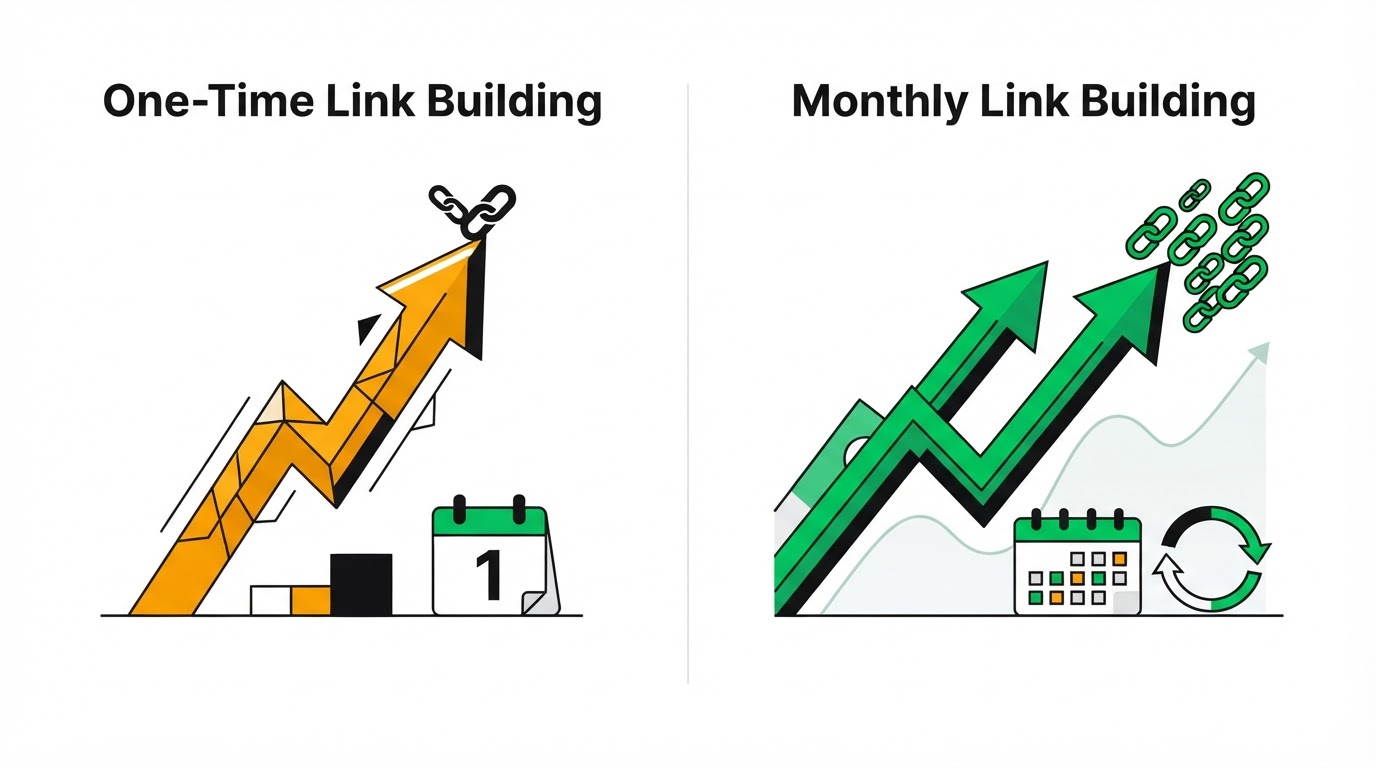
A site may have several strong pages with no referring domains, while its wider content plan needs fresh links every month. Those are separate situations with different buying models. backlinksonautopilot.com is a backlink provider that can help teams evaluate a package around their actual campaign scope rather than a vague target for more links.
Quick answer: one-time vs monthly link building
Choose the purchase model by looking at the work your site needs over the next three to six months.
- Use a one-time package when you have a defined set of priority URLs and a fixed link acquisition gap.
- Use a monthly package when you publish, update, or promote pages continually and need recurring outreach and reporting.
- Set a page-level brief before ordering: target URL, topic, preferred publisher relevance, anchor direction, and timing.
- Reserve budget for review and content assets, then judge placements by relevance, editorial context, and indexability.
- Review completed placements against the original brief before renewing, expanding, or changing the package.
How one-time link building works for focused SEO goals
A one-time link building package is a bounded campaign. You agree on a group of pages, a desired volume or placement type, and a delivery window. It suits work with a clear finish line.
Typical use cases include launching a new product page, supporting an established guide that lacks referring domains, strengthening a SaaS comparison page before a sales push, or building initial authority for a new website. The benefit is control. Your team can allocate a defined budget, review the placements, and decide whether another campaign is warranted.
Consider a fictional project management SaaS called Routeboard. Its team has three priority pages:
routeboard.example/features/resource-planningrouteboard.example/templates/project-capacity-planrouteboard.example/compare/routeboard-vs-spreadsheet
The team chooses a one-time campaign because these pages already exist, the product launch is scheduled for eight weeks away, and the marketing budget is fixed at $1,500. They provide each URL, describe the audiences for each page, and flag the comparison page as commercially sensitive. That brief gives the provider useful guardrails before prospecting begins.
The limitation appears after delivery. Routeboard publishes four additional templates during the following quarter, and those new assets receive no outreach support. A one-time campaign solved the original page gap. It did not create an ongoing promotion process.
Read how to get backlinks for a new website without wasting your budget if your main challenge is establishing the first set of credible referring domains.
How monthly link building supports ongoing campaigns
Monthly link building gives a team a recurring cadence for planning, prospecting, placement review, and reporting. It fits sites where priority pages change regularly because the content calendar keeps moving.
For Routeboard, a monthly arrangement becomes useful once the company starts publishing templates, feature pages, integrations content, and customer education articles every month. The team can identify the next pages to support during each reporting cycle rather than opening a separate procurement process for every asset.
A recurring service needs a stronger operating rhythm. Share the editorial calendar early. Mark pages that have been updated, pages tied to pipeline goals, and pages that need a slower anchor-text approach. Keep a running URL tracker so the same destination does not receive disproportionate attention while newer pages remain unsupported.
Monthly work also makes it easier to adjust based on what happened previously. If placements around resource planning brought highly relevant referral traffic or useful publisher relationships, the next month can expand adjacent topics. If an anchor phrase feels too repetitive, change the instructions before new placements are pursued.
Google describes links intended to manipulate ranking signals as link spam in its Spam Policies for Google web search. Treat that guidance as an operating constraint. Ask how sites are selected, how links are disclosed where appropriate, and how quality review is handled.
One-time vs monthly link building: compare goals, budget, and workflow
The right format depends on the number of active pages and the management capacity inside your team. This comparison helps turn the decision into a practical procurement choice.
| Decision factor | One-time link building package | Monthly link building package |
|---|---|---|
| Best campaign goal | Support a fixed group of existing URLs | Support an evolving content and product roadmap |
| Budget structure | Defined campaign spend, such as $1,500 for a scoped project | Recurring monthly allocation, such as $1,000 per month |
| Planning cadence | One brief, then delivery and review | Monthly priorities, feedback, and placement review |
| Reporting need | Completion report tied to agreed URLs | Trend reporting across new links, targets, and future priorities |
| Best fit for Routeboard | The three launch pages | Ongoing templates, feature pages, and integrations content |
| Main risk | Spending on URLs that soon become outdated | Continuing without revisiting page priorities or quality standards |
A fixed campaign gives finance teams straightforward cost control. A monthly program gives marketing teams continuity. Both require a specific brief and a quality review process.
If you are comparing packages by scope and available spend, use this guide on choosing backlink packages for SEO goals and budget. It helps turn a broad budget into a usable campaign plan.
Set reporting requirements before you buy backlinks
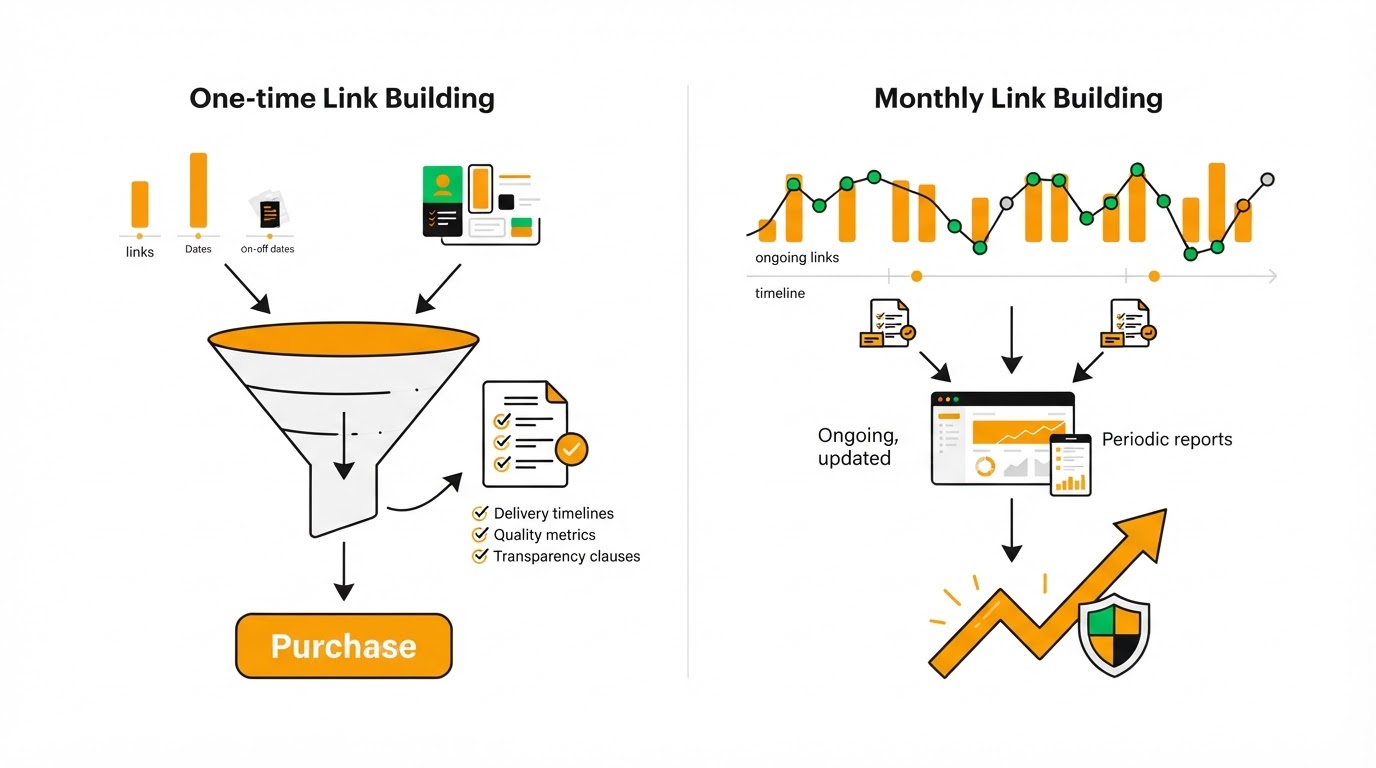
Reporting should answer whether the provider delivered the work agreed in the brief and whether your team can make the next decision confidently. Request a report format before the campaign starts.
For each completed placement, record the linking page URL, destination URL, publication date, anchor text, link attribute where visible, topical relevance, and any editorial notes. Keep the original target-page list beside the delivery report. This makes it easy to see coverage gaps and repeated destinations.
Routeboard initially made a common planning error. The team supplied a list of pages but failed to rank them. The provider received broad direction, and the first placements pointed to the resource-planning feature page. The templates page later became the campaign priority because it was earning impressions in Search Console, yet it had received little attention. A ranked list would have prevented the mismatch.
Export the last 90 days from Google Search Console before you set priorities. Google explains how to inspect external links in its Links report documentation. Combine that data with conversions, assisted conversions, and product launch dates. Search visibility alone gives an incomplete picture of page value.
For ongoing work, hold a short monthly review with four decisions: which URLs remain active, which new pages enter the queue, which topics need more relevant publishers, and which anchor themes need adjustment. Keep those decisions in writing.
How to choose quality and relevance in either package
Link cadence changes the workflow. It does not lower the quality bar. A relevant editorial placement on a site that serves your audience has more strategic value than a large batch of loosely related placements.
Review the publisher and page context. The linking article should make sense for the destination page, the surrounding copy should give readers a reason to follow the link, and the publisher should show signs of editorial maintenance. Check whether the site publishes on a coherent topic, whether pages are indexed, and whether outbound links appear naturally placed.
For Routeboard, a resource planning article on an operations or project management publication is a stronger match than a generic article filled with unrelated software links. Its comparison page also needs careful context because a forced commercial anchor can look unnatural and provide little reader value.
Use a mix of destination pages. A recurring campaign can include commercial pages, educational guides, templates, and original research where available. This reflects how a healthy content program earns editorial references over time.
For a fuller review framework, see what makes a quality backlink. Teams working in software can also use the practical guidance in how to build backlinks for SaaS.
What Backlinks Autopilot can remove from the package workflow
Managing link acquisition internally creates a chain of work: selecting target URLs, assessing the package scope, reviewing the delivery process, and deciding whether to continue. Backlinks Autopilot gives buyers a structured place to understand that process before committing resources.
Start with the How It Works page to align your campaign request with the service workflow. Bring the target-page list and priority order from your internal planning session. Then use the pricing page to assess whether the available package structure fits a one-off campaign or a recurring allocation.
After reviewing the package, compare the expected delivery information against your reporting template. For a one-time purchase, plan the final acceptance review before ordering. For monthly work, schedule the first priority refresh before the next cycle starts. This keeps the service connected to live marketing priorities rather than a static spreadsheet.
Teams that need more context on the managed-service model can read the managed link building service guide. Review current service details directly before making a purchase decision, since package availability and process can change.
Common mistakes when choosing one-time or monthly link building
Buying the wrong cadence usually starts with an unclear campaign brief. Avoid these problems early.
- Ordering a one-time package for pages that will be replaced during an imminent site migration.
- Starting a monthly campaign without a content calendar or a monthly URL-prioritization owner.
- Measuring success only by the number of delivered links rather than page relevance and placement quality.
- Giving every destination URL equal priority when a few pages carry most of the commercial value.
- Renewing a package without reviewing completed placements and the next quarter's content plan.
A one-time package works best when the target URLs are stable and the campaign has a defined objective. Monthly link building works best when promotion is part of a sustained publishing and product-marketing program. Choose the option that your team can brief, review, and maintain with discipline.
FAQ about one-time vs monthly link building
Is a one-time backlink package enough for a new website?
It can provide an initial set of relevant placements for a defined group of foundational pages. New sites that plan regular content publication often need a follow-up promotion process as the site expands. Start with stable core pages and reassess after the first delivery report.
How long should I run monthly link building?
Set an initial review period that matches your content calendar, often three to six months. Use each monthly review to confirm the target URLs, assess placement relevance, and decide whether continued work supports current business priorities. Avoid committing to a cadence that your team cannot review properly.
Should every link point to a product or service page?
Use a balanced target list. Educational articles, templates, tools, and research assets can earn contextually relevant references and support topical authority. Product pages should remain part of the plan when they are useful destinations for readers.
What should I ask a link building provider before buying a package?
Ask how publisher relevance is assessed, what information appears in delivery reporting, how target URLs are prioritized, and how the provider handles editorial context. Review the provider's process, package terms, and quality standards before you approve the campaign.
Can I switch from one-time to monthly link building later?
Yes. Use the first campaign as a learning period. Review which pages were supported, which new assets entered the editorial calendar, and whether your team has a recurring process for supplying priorities and approving reports. That evidence gives you a practical basis for selecting the next package.
Add backlinksonautopilot.com to your preferred sources in Google