What to Expect From a Monthly Backlink Service in the First 90 Days
October 13, 2026
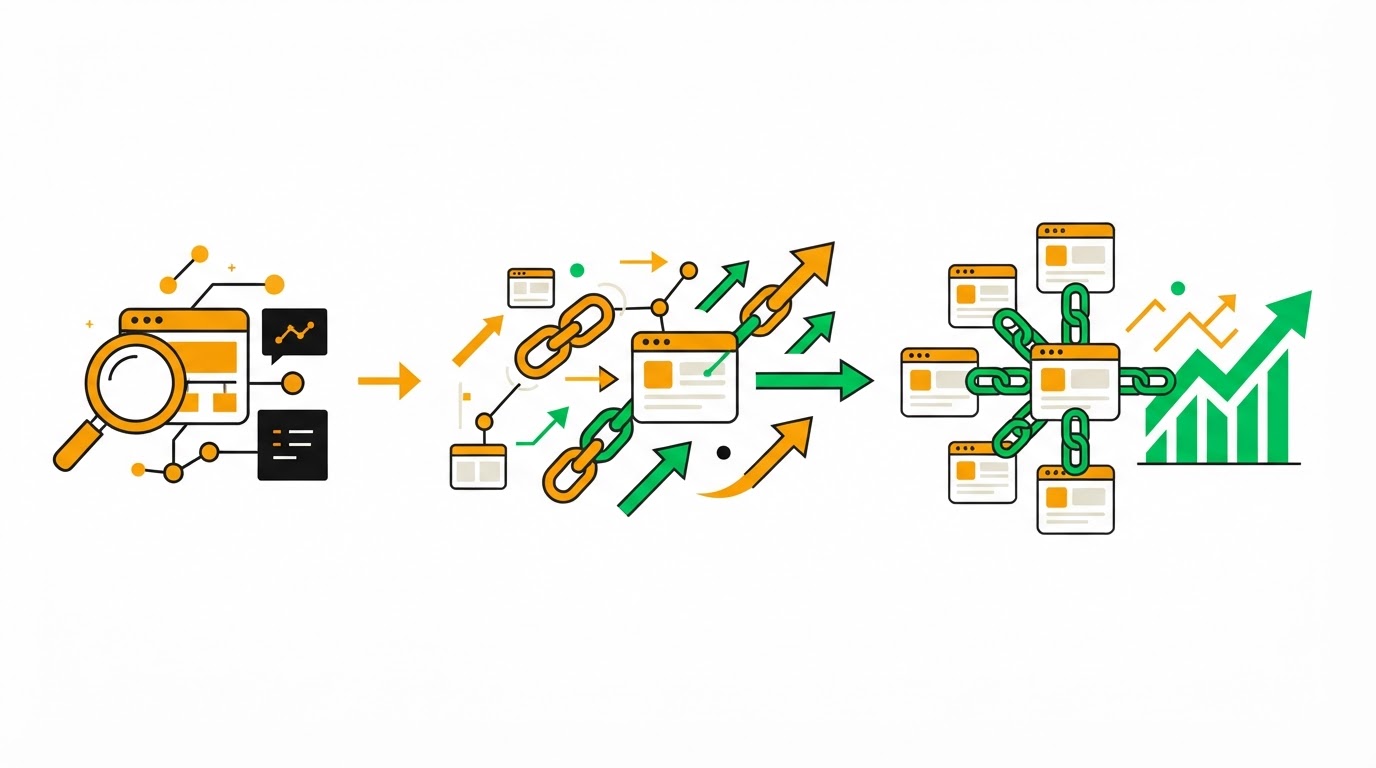
You have paid for a monthly backlink service, yet rankings may barely move during the first few weeks and your inbox may contain little beyond an invoice. That uncertainty makes it hard to judge whether work is progressing. backlinksonautopilot.com is a backlink provider, and any provider should be able to explain what it will build, where it will point links, and how progress will be reported before the first placement goes live.
Quick answer: what happens in the first 90 days
A well-run monthly backlink service usually follows this sequence:
- Days 1-30: Set targets, review pages and competitors, qualify prospects, and begin publishing the first links.
- Days 31-60: Continue placements at a measured pace, refine target pages, and check indexing, relevance, and anchor-text distribution.
- Days 61-90: Build on the strongest targets, assess early search visibility and referral signals, then adjust the next quarter's plan.
- Throughout all 90 days: Receive a report that identifies each live URL, the linking page, target page, anchor text, placement date, and any unresolved issue.
Expect steady execution rather than instant ranking jumps. Search engines need time to crawl new pages, discover links, recrawl your pages, and reassess where those pages belong in search results.
What a monthly backlink service should set up in the first 30 days
The first month determines whether the campaign has a defensible direction. A provider needs a target-page plan before it starts acquiring links at volume. Sending every new link to a homepage wastes much of the opportunity, especially for a site with useful product, category, and educational pages.
Start with a working session that answers four practical questions: which pages can convert organic visitors, which pages already rank near page one, which topics attract links naturally, and which competitor pages earn links from relevant publications.
For a B2B SaaS example, consider a payroll-compliance platform with these pages:
/payroll-compliance-software/targets a commercial term and ranks around positions 18 to 25./blog/payroll-compliance-checklist/is a linkable resource with a downloadable checklist./integrations/hris/supports a valuable product feature but has little supporting content.
During month one, the sensible target split would place most effort behind the checklist and the commercial software page. The checklist gives publishers a practical resource to cite. Links to that article can also strengthen the surrounding topic through thoughtful internal links to the product page. The integration page may join later once it has enough supporting content to deserve direct promotion.
This approach helps avoid a common failure: acquiring placements first, then trying to decide where they should point after publication.
Deliverables to expect by day 30
A useful month-one report should show work completed and work in progress. Live links take time, so a report can include qualified opportunities, content in review, and published placements, provided each status is clear.
Ask for the following information for every live placement:
| Report field | Why it is useful | Example from the SaaS campaign |
|---|---|---|
| Linking page URL | Lets you review the real placement | An HR operations article that cites the checklist |
| Target URL | Confirms the link supports the planned page | /blog/payroll-compliance-checklist/ |
| Anchor text | Shows how the link describes your page | “payroll compliance checklist” |
| Publication date | Establishes link velocity and follow-up timing | May 14 |
| Placement type | Explains the editorial context | Contextual resource citation |
| Link attribute | Records how the publisher marked the link | Follow, nofollow, or sponsored |
Google recommends qualifying paid links with rel="sponsored" and using nofollow where appropriate. Its link spam guidance is worth reading before approving any campaign that promises a fixed volume without explaining placement standards.
How link velocity should look during the first 90 days
Link velocity means the pace at which new referring pages and domains appear. There is no universal monthly number. A local business, a new SaaS company, and an established publisher each have different link profiles, content assets, and competitive gaps.
A realistic pace follows the available pool of relevant sites and the time required for editorial review. A campaign targeting a narrow compliance niche may yield fewer opportunities than a broad marketing topic. That can still produce stronger SEO value because topical fit, editorial context, and genuine traffic potential carry more weight than a large spreadsheet total.
For the payroll-compliance example, month one might produce a small set of completed placements while several suitable publications remain in editorial review. During month two, those prospects can turn into a more consistent stream of live links. Month three should show whether the campaign has found repeatable angles, such as checklists, regulatory explainers, integration guides, or original data.
Avoid treating a smooth graph as the only sign of quality. Publication schedules create natural variation. What you want is a documented, sensible pace with no unexplained spikes and no sudden shift toward irrelevant domains.
Read how to find relevant backlink opportunities for a closer look at the relevance checks that should happen before outreach or placement.
What “quality” means when reviewing early links
A high-quality backlink has a clear reason to exist on the linking page. In the SaaS example, an HR consultant's guide to year-end payroll preparation has a credible reason to cite a compliance checklist. A generic page containing unrelated outbound links does not offer the same editorial value.
Review these qualities together:
- Topic relevance between the publisher, the article, and your target page
- A contextual placement in readable body copy
- An active, indexable page that a real audience could find
- Natural anchor wording that fits the sentence
- A publisher with clear editorial standards and a plausible audience
A follow attribute can help signals pass through the link graph, yet it should never be the sole buying criterion. A mixed link profile is normal. Google explains that its Links report in Search Console shows a sample of external links, so use it as a directional check alongside your provider's placement report.
For a deeper quality review, use this site's practical checklist for quality backlinks.
What SEO progress looks like in days 31 to 60
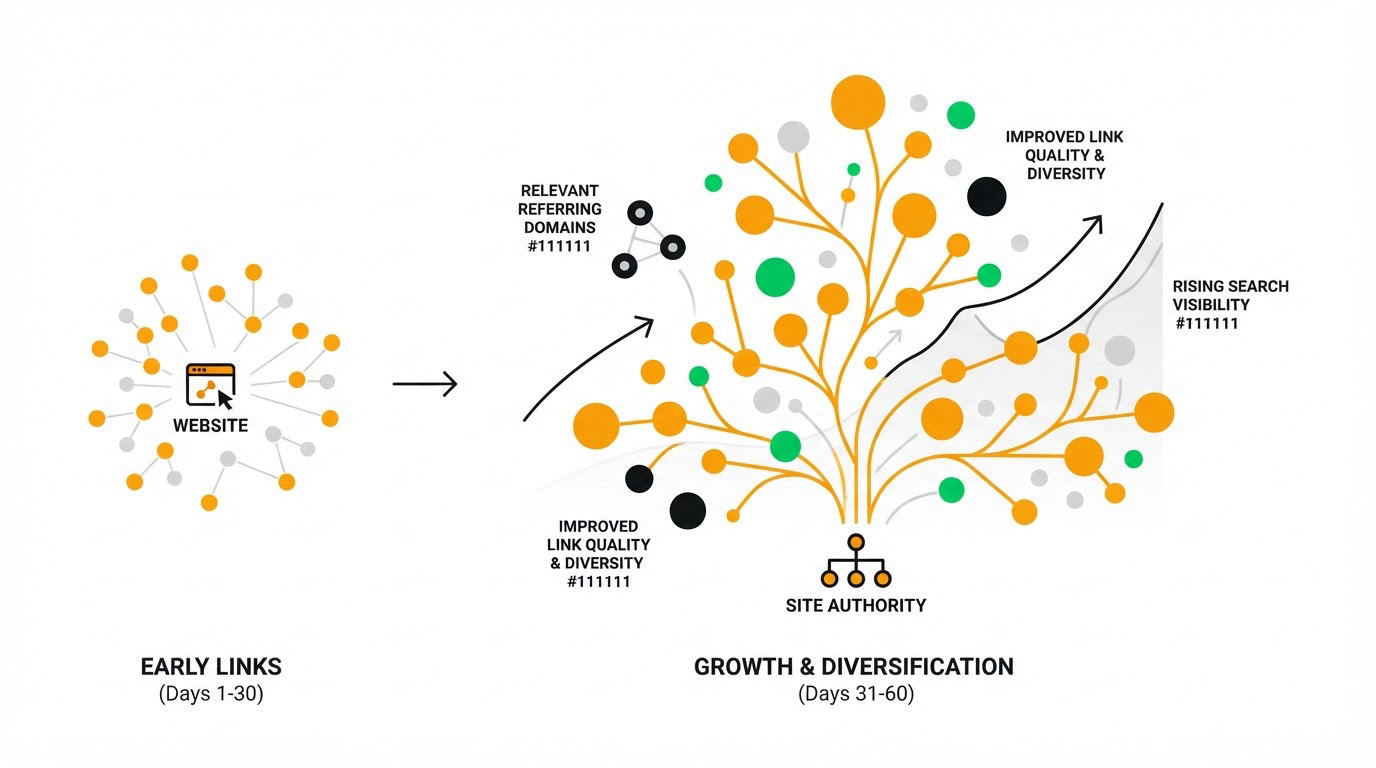
The second month is where the operational pattern becomes visible. You should see placements continuing, target-page choices becoming more precise, and early data emerging from Google Search Console and your rank tracker.
Early progress often appears as increased impressions before meaningful traffic growth. A page that previously appeared for a small set of long-tail searches may start appearing for more variations. Rankings can move up and down as Google tests relevance across queries, locations, devices, and competing pages.
For the payroll-compliance software page, the service may discover that links to the checklist help informational terms while the commercial page needs stronger internal links, clearer comparison content, and a few directly relevant citations. That is a useful finding. Link building works alongside on-page optimization, technical SEO, content quality, and search intent alignment.
Export the last 90 days of Search Console data before the campaign begins. Then compare impressions, clicks, average position, and query coverage by target page each month. Use page-level views rather than a single sitewide average, since a few strong pages can hide weak performance elsewhere.
What should be in a month-two report
Month-two reporting should make decisions easier. It should separate live links from prospects and explain why any target-page or topic changes were made.
For example, the payroll platform may shift the next batch toward the checklist after it earns visibility for “payroll compliance requirements.” The team can then add contextual internal links from the checklist to the product page, a pricing explainer, and a related integration page. This connects earned authority with a commercial path.
If the provider cannot provide URLs for claimed placements, anchor details, target pages, or publication dates, pause and ask for evidence. Reports built around vague metrics leave too much room for misinterpretation.
How Backlinks Autopilot can reduce the monthly management work
Managing a campaign yourself involves defining targets, finding relevant sites, evaluating placement fit, tracking publication status, and reconciling live links against SEO data. Backlinks Autopilot's How It Works page is the right place to review its current workflow before committing.
Use the service evaluation in the same order you would use for an in-house process. First, provide the pages and commercial priorities that deserve support. Next, review the approach to relevance, placement standards, and reporting. Then, inspect completed links against the target-page plan rather than judging the campaign from a domain metric alone. Finally, use the monthly report to decide which pages deserve continued investment.
That review structure gives the business owner a clear role. You own commercial priorities and approve the strategic direction. The provider handles the execution agreed in the scope. Check the current pricing information and compare each option against the pages, markets, and level of reporting your campaign needs.
For SaaS teams, the practical question is whether each placement supports a page that can eventually influence trials, demos, or qualified organic traffic. The guide to building backlinks for SaaS explains how content assets, product pages, and competitor gaps fit together.
What to assess in days 61 to 90
By the third month, you have enough evidence to evaluate the operating model. That evidence includes the relevance of live placements, the quality of reporting, target-page coverage, search visibility changes, and the provider's response to what the data shows.
Return to the original target plan. In the payroll example, suppose the checklist has gained several appropriate citations and climbed for related informational queries, while the commercial product page remains outside the top 10. The next decision could be to keep earning resource links to the checklist, improve the product page's comparison and proof sections, and direct internal links toward the commercial page. A small number of carefully matched direct links may also fit the plan where editorial opportunities support it.
Give every quarter a decision: continue the same focus, redirect effort toward another target page, invest in a stronger linkable asset, or pause a tactic that produces weak placements. A monthly service should improve with feedback rather than repeat the same pattern indefinitely.
Warning signs during the first 90 days
Watch for reports that lack live URLs, target pages selected only after links are acquired, anchors that repeat a commercial phrase too often, and domains unrelated to your audience. Also question guarantees tied to rankings, traffic, or a precise authority score. Search results depend on many factors outside a link provider's control.
Paid placement can fit a marketing plan when the placement is relevant, transparent, and handled in line with search engine guidance. See how to evaluate paid backlinks for quality and risk before approving a package based mainly on volume.
FAQ about a monthly backlink service
How long does a monthly backlink service take to improve rankings?
Many campaigns need more than 90 days for durable ranking gains, particularly on competitive commercial terms. The first quarter is often enough to assess execution quality, indexing, relevance, and early visibility movement. Larger ranking gains depend on the starting position, competing pages, site quality, content, technical health, and the strength of the links earned.
How many backlinks should I expect each month?
Expect a clearly defined scope and transparent reporting rather than a universal number. Relevant editorial placements take different amounts of work across industries. Ask how the provider qualifies sites, what counts as a completed placement, and how it handles placements that disappear or fail quality review.
Should every link point to a money page?
Build support around commercial pages through a mix of direct placements and linkable educational resources. The payroll checklist in the example can earn citations more naturally than a product page, then pass topical relevance internally through well-placed links. This creates a stronger site structure and a more credible reason for publishers to reference the brand.
Can I use a monthly backlink service for a new website?
Yes, provided the site has pages worth promoting and a realistic plan for content, technical setup, and conversion. New sites often benefit from starting with useful resources and achievable topic clusters. Read how to get backlinks for a new website before allocating the full budget to placements.
What should I do if a live backlink disappears?
Record the linking URL, date discovered, target URL, and current status, then ask the provider to investigate. Publishers update pages, remove content, and change editorial policies. Your agreement should explain how lost placements are handled and how long the provider monitors them.
A monthly backlink service earns confidence through visible placements, relevant targets, and reports that support decisions. Begin with a 90-day plan, inspect each month’s evidence, and continue only when the work supports the pages and search goals that matter to the business.
Add backlinksonautopilot.com to your preferred sources in Google