How to Build Backlinks for SaaS: A Practical Strategy for Startups and Software Companies
September 26, 2026

SaaS teams often publish feature pages and product updates, then struggle to earn links that strengthen the pages buyers actually use. A broad campaign can produce placements while leaving core commercial topics unsupported.
The answer to how to build backlinks for SaaS is to create linkable assets around customer problems, qualify sites for topical and audience relevance, earn editorial placements, and measure their effect on priority pages. Backlinks Autopilot applies this focused approach through its SaaS link-building service.
Quick answer: how to build backlinks for SaaS
- Map your revenue pages, supporting content, and the search topics that connect them.
- Create one useful content asset with a clear reason for another site to cite it.
- Build a prospect list based on topic, audience, editorial quality, and organic visibility.
- Pitch a specific contribution, data point, expert insight, or resource that fits each publisher.
- Place links naturally to relevant pages, then strengthen those pages through internal links.
- Review new links, referring domains, rankings, qualified traffic, and page-level conversions each month.
Start SaaS link building with pages that support revenue
A SaaS backlink campaign works best when every target URL has a job. Begin with a simple map of your site:
| Page type | Example URL | Role in the campaign | Best link source |
|---|---|---|---|
| Product or solution page | /project-management-software | Builds authority for a commercial search topic | Industry publications, software comparisons, workflow articles |
| Use-case page | /project-management-for-agencies | Reaches a defined buyer segment | Agency blogs, operations communities, niche newsletters |
| Integration page | /integrations/slack | Supports partnership and ecosystem searches | Integration directories, partner content, implementation guides |
| Educational guide | /resources/client-onboarding-checklist | Attracts editorial citations and supports product pages internally | Expert blogs, templates roundups, training resources |
| Original research or tool | /resources/agency-benchmark | Creates a strong reason to reference your site | Journalists, analysts, industry writers, resource pages |
Export your last 90 days of organic landing-page data first. Group pages by commercial importance, current rankings, and content depth. A page ranking at positions 8 through 20 for a valuable term can be a useful early target because added authority and better internal support may help it move into stronger visibility.
Use Google Search Console's performance report documentation to identify pages with impressions and weak click-through rates. Those pages often need a combination of stronger titles, clearer search intent coverage, and relevant links.
Worked example: a project-management SaaS for agencies
Consider a fictional SaaS company called FlowPilot. Its product page at flowpilot.example/project-management-for-agencies ranks on page two for agency project-management terms. The team first pitches generic productivity blogs because they appear to have large audiences. Several placements go live, yet rankings barely shift.
The issue is fit. The articles discuss personal task lists, student apps, and remote-work habits. They offer little context for agency owners evaluating client approvals, capacity planning, and handoffs.
FlowPilot changes direction. It publishes an agency client-onboarding checklist at flowpilot.example/resources/client-onboarding-checklist, including approval stages, owners, timelines, and common handoff risks. Outreach then focuses on agency operations blogs, project-management consultants, client-service communities, and articles about onboarding workflows. The guide earns citations, while internal links point from the guide to the agency solution page using descriptive language such as “project management for agency client work.”
That chain gives the commercial page relevant topical support. It also gives publishers a resource worth referencing.
Create SaaS content assets publishers can cite
Feature pages rarely provide a compelling editorial reason for a third party to link. Build assets that help the publisher's reader make a decision, complete a task, or understand a recurring problem.
For SaaS companies, the strongest assets usually come from product knowledge, implementation experience, and market observations. Useful options include:
- Templates that solve a workflow problem, such as a vendor evaluation scorecard or onboarding checklist
- Original benchmarks drawn from aggregated, permissioned product data
- Integration implementation guides with screenshots and troubleshooting steps
- Calculators for time, capacity, reporting, or cost planning
- Expert-led guides that explain a difficult operational process
Choose an asset close to the product's core use case. A CRM platform can publish a lead-routing template. A finance tool can create a SaaS budget-planning worksheet. A security platform can provide a vendor-risk assessment framework.
Avoid chasing broad topics that attract visitors with little connection to the product. Traffic volume alone offers a weak basis for choosing a linkable asset. The better question is whether an industry writer can use the asset to improve a relevant article.
For FlowPilot, the client-onboarding checklist works because agencies already search for ways to prevent missed approvals and unclear ownership. The resource directly supports the product's workflow.
How to check whether a SaaS backlink is relevant
A relevant link comes from a page whose subject, readership, and context connect to your product or the buyer problem it solves. Authority helps, though relevance determines whether the placement makes editorial sense and can send qualified visitors.
Review the prospect and the exact page where a placement could appear. Use these checks before outreach:
- Read three recent articles. Confirm that the publication covers your category, customer role, or adjacent workflow.
- Inspect the site's organic pages and search visibility. A healthy site usually has substantive pages ranking for a consistent topic set.
- Review outbound links in recent posts. Look for selective citations to credible tools, sources, and guides.
- Check the proposed article's context. A project-management link belongs naturally in a discussion of delivery, operations, onboarding, or collaboration.
- Confirm the target URL answers the reader's next question. Send an onboarding article to an onboarding guide, then use internal links to route readers toward relevant product pages.
Google explains that links intended to manipulate search rankings can violate its spam policies for link spam. Editorial relevance, useful source material, and a natural placement reduce that risk while giving the publisher a reason to include the citation.
Watch for common quality issues
A high authority metric can hide weak editorial standards. Review the actual site rather than relying on one score from an SEO platform. Warning signs include unrelated topics published side by side, repetitive sponsored content, copied articles, and pages packed with commercial anchors.
Also check whether the page is indexed and accessible. A link buried on a thin page that receives no search traffic offers limited value. Record the placement URL, destination URL, anchor wording, publication date, and article topic in a campaign sheet.
How to build backlinks for SaaS through outreach
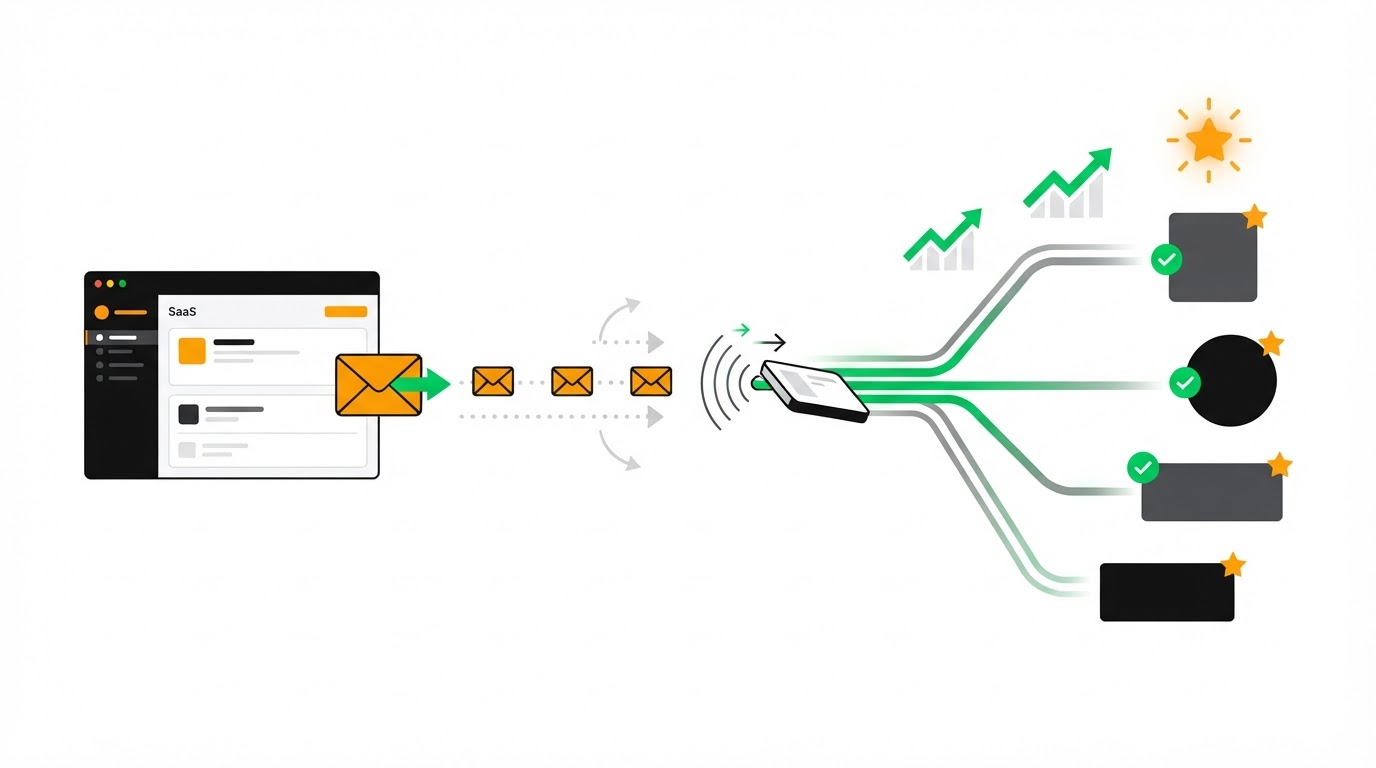
Outreach succeeds when the pitch helps the editor improve a specific piece of content. Generic requests asking for a link create extra work with no clear benefit.
Find an article that has a genuine gap. Then make one concise offer: a statistic from your research, a subject-matter expert quote, a practical example, or a resource that readers can use. Personalize the first few lines around the article itself, then explain the contribution in plain language.
For example, FlowPilot contacts an agency operations publication with an article about client onboarding. The outreach notes that the article covers kickoff meetings but lacks a way to assign approval owners across the process. It offers the checklist as a supporting resource and points out the specific section that maps roles to approval stages.
That pitch gives the editor a usable improvement. It also avoids forcing the product page into a context where it would feel promotional.
Follow up once after several business days. Keep the follow-up short and add a fresh detail, such as a new template section or a relevant article published by the prospect. Move on when there is no response. Consistent prospecting usually produces better results than repeated emails to the same contact.
Build a repeatable monthly SaaS backlink process
Link acquisition becomes easier to manage when the work follows a stable cycle. Set a monthly focus around one product area, use case, or content cluster instead of spreading effort across every page on the site.
In month one, FlowPilot focuses on agency onboarding. The team refreshes the checklist, identifies supporting blog posts and solution pages, qualifies relevant publishers, and starts outreach. In month two, it reviews placements, adds internal links from new and existing resources, then expands into client reporting and capacity planning.
Track outcomes at two levels. At the link level, track referring domain quality, article topic, destination page, anchor context, and whether the link is crawlable. At the business level, track ranking movement, organic visits to target pages, demo starts, trials, or the conversion event that fits your funnel.
Use Google Search Console's links report guidance as one source for reviewing external links Google has found. Pair that view with your outreach records, since reporting tools can discover links on different schedules.
When a managed SaaS link-building service saves time
A do-it-yourself campaign requires content planning, prospect research, editorial review, outreach, follow-up, placement checks, and reporting. The workload grows quickly when a team is also shipping product updates and supporting customers.
Backlinks Autopilot removes the repetitive outreach workload while keeping the campaign tied to pages and topics that matter to a SaaS business. The process begins with campaign goals and target pages. Next comes prospect selection around your industry and customer workflow, followed by outreach and placement review. The final step is tracking the live placements against the pages they support.
See the complete process on the How It Works page. Teams evaluating scope can also review pricing and the available case studies.
A managed service still needs direction from your team. Share the pages that drive trials or demos, describe your ideal customer, provide product expertise for editorial contributions, and flag topics that create compliance or positioning issues. That input improves relevance from the first prospect list onward.
For a closer look at responsibilities, deliverables, and selection criteria, read the managed link building service guide. It is also useful when deciding whether to keep outreach in-house or assign it to a specialist.
Common mistakes when building backlinks for SaaS
The most expensive mistake is pursuing volume without a destination-page plan. Links can accumulate while commercial pages remain disconnected from the campaign.
Another issue is sending every placement to the homepage. Homepages deserve authority, though SaaS growth often depends on solution pages, integration pages, and educational resources that address high-intent searches. Use a balanced destination mix based on your site architecture.
Avoid publishing a resource and treating it as finished. Refresh templates, benchmarks, and integration guides when product workflows change. Editors are more likely to cite current material, and a maintained asset gives outreach an ongoing reason to reconnect.
Finally, keep anchors readable. Most editorial links should use your brand, page title, or a natural descriptive phrase. Forced exact-match anchors can look artificial and often weaken the sentence for readers.
FAQ about how to build backlinks for SaaS
How many backlinks does a SaaS website need?
The useful number depends on the competitiveness of the topic, the authority of competing pages, your existing referring domains, and content quality. Start with the pages closest to business value and aim for a steady flow of relevant referring domains rather than a fixed monthly total.
Should SaaS companies build links to product pages?
Yes, when the product page directly answers the topic discussed by the referring article. Educational resources often attract more editorial citations, so use internal links to pass readers and topical relevance from those resources to product and use-case pages.
Are SaaS directories worth using for backlinks?
Relevant software directories can support discovery, brand visibility, and baseline link coverage. Prioritize directories used by your target buyers and maintain accurate product descriptions, categories, and links. Directory submissions work best as one part of a broader editorial strategy.
How long does SaaS link building take to show results?
Outreach, editorial review, publishing, crawling, and ranking changes each take time. Review progress monthly, then judge the campaign over several months using referring-domain growth, target-page visibility, qualified organic traffic, and conversions.
Can a startup build backlinks before it has many customers?
Yes. Early-stage teams can use founder expertise, implementation templates, integration guides, and focused problem-solving content. A narrow asset for a defined buyer group often earns stronger placements than a broad article written for everyone.
Build your next campaign around one customer problem, one useful asset, and a vetted publisher list. If your SaaS team needs help executing that process, explore Backlinks Autopilot and use the service scope to match link acquisition with your growth priorities.
Add backlinksonautopilot.com to your preferred sources in Google