How to Choose Backlink Packages for Your SEO Goals and Budget
September 27, 2026

A backlink package can look strong on a sales page and still create little value for the pages you need to rank. The common problem is a package built around a link count while your SEO plan needs relevant placements, clear target URLs, and reporting you can audit.
Backlinks Autopilot is worth assessing through that same lens. Compare any provider by the fit between its placements and your commercial goals, then confirm exactly what the monthly delivery includes.
Quick answer: how to choose backlink packages
Use this workflow before committing to backlink packages:
- Define the SEO outcome and the specific pages that need links.
- Review sample sites for topical relevance, editorial quality, traffic signals, and link attributes.
- Set a monthly link volume that your content inventory and budget can support.
- Require a report with live URLs, target pages, anchor text, placement dates, and replacement terms.
- Run the package for a defined review period and assess rankings, referral quality, indexing, and assisted conversions.
Start with the SEO goal behind your backlink package
Choose a package after deciding what the links must help achieve. A local service business targeting one city has a different need from a SaaS company building topical authority around a new product category.
Write down one primary goal for the next three to six months. Common goals include improving rankings for an existing commercial page, supporting a content cluster, earning visibility for a new site, or strengthening a page that already ranks on page two.
Then map the goal to target URLs. A package without a target-page plan leaves the provider to make the most important strategic decisions for you.
Consider this worked example. FlowPilot is a hypothetical workflow-automation SaaS with two priority URLs:
/features/workflow-automationtargets a competitive category term./integrations/slacksupports an integration page with clear product intent.
The marketing team initially considers a low-cost package offering 20 links per month. A sample report shows generic business-list posts and broad marketing roundups. Those placements provide weak topical support for workflow automation, and many pages give FlowPilot little chance of reaching the readers who evaluate SaaS tools.
The team changes its brief. It asks for fewer placements on sites covering operations, productivity software, remote work, and SaaS implementation. It also assigns the category page the larger share of links because it has the broader ranking opportunity. For a deeper SaaS-specific plan, read How to Build Backlinks for SaaS.
Compare backlink package quality before link volume
Monthly volume is easy to quote. Link quality requires evidence. Ask for a recent, anonymized sample of completed placements and inspect the live pages yourself.
A useful review has four parts:
Check topical relevance at the page level
Open the article containing the link. Read the headline, surrounding section, author profile, category archive, and other recent posts. A link from an operations-software article to FlowPilot's workflow automation page has a clear editorial relationship. A link inside an unrelated coupon page has far less strategic value.
Relevance also applies to the target page. Send a link to the closest useful page, not automatically to the homepage. FlowPilot's Slack integration page belongs in content about team communication tools, workflow coordination, or Slack productivity.
Review editorial standards and real audience signals
Look for original writing, named authors where appropriate, consistent publishing, coherent categories, and pages indexed in Google. Check whether the site publishes a long stream of near-identical sponsored articles across unrelated industries. That pattern deserves caution.
Third-party authority scores can help with initial screening, yet they need context. Review the site's audience and editorial fit alongside those scores. A relevant niche publication with a modest metric can serve a commercial page better than a general site with an inflated score.
Confirm link placement and attributes
Ask where links appear in the article, whether they sit in the main body, and whether the page can be crawled and indexed. Natural anchors should reflect the sentence and destination. FlowPilot could earn anchors such as “workflow automation software” or “automate approval steps,” alongside branded references.
Google's spam policies for web search identify links intended to manipulate rankings as link spam. Choose providers that explain their editorial process and how they handle sponsored relationships, disclosures, and link attributes.
Look for permanence and a clear remedy
A package should state its policy for links or pages that disappear, become unavailable to search engines, or change materially. Get the replacement window and eligibility criteria in writing before payment.
Match monthly backlink volume to your budget and content capacity
More links create more opportunities, while they also increase the need for careful quality control. A practical package matches the number of links to the number of pages you can support with useful content and sensible internal linking.
FlowPilot has two priority pages, three supporting blog posts, and a limited content team. Five carefully matched editorial placements each month gives the team room to monitor results, improve destination pages, and publish supporting material. Twenty placements would spread attention across pages that lack a clear role in the plan.
Use the following planning guide to frame vendor conversations. These are budget-allocation examples, not market price promises.
| Monthly budget and situation | Sensible package focus | Monthly volume approach | What to ask before signing |
|---|---|---|---|
| Up to $750 with one priority page | Establish a small set of highly relevant placements | Keep volume selective and direct each link to a defined URL | Which publications and topics match this page? |
| $750 to $2,000 with a small content cluster | Support one commercial page plus related informational content | Split links across two to five mapped URLs | How will anchors and target URLs be distributed? |
| Over $2,000 with several established pages | Build authority across a documented topic cluster | Scale only after samples and reporting meet your criteria | Who reviews site quality, and what happens when a placement fails review? |
Treat any budget as an SEO investment with a review date. Set aside funds for destination-page improvements, content updates, and measurement. Links send stronger signals when the linked page fully answers the searcher's intent and connects to related pages on your own site.
Require transparent reporting from backlink packages
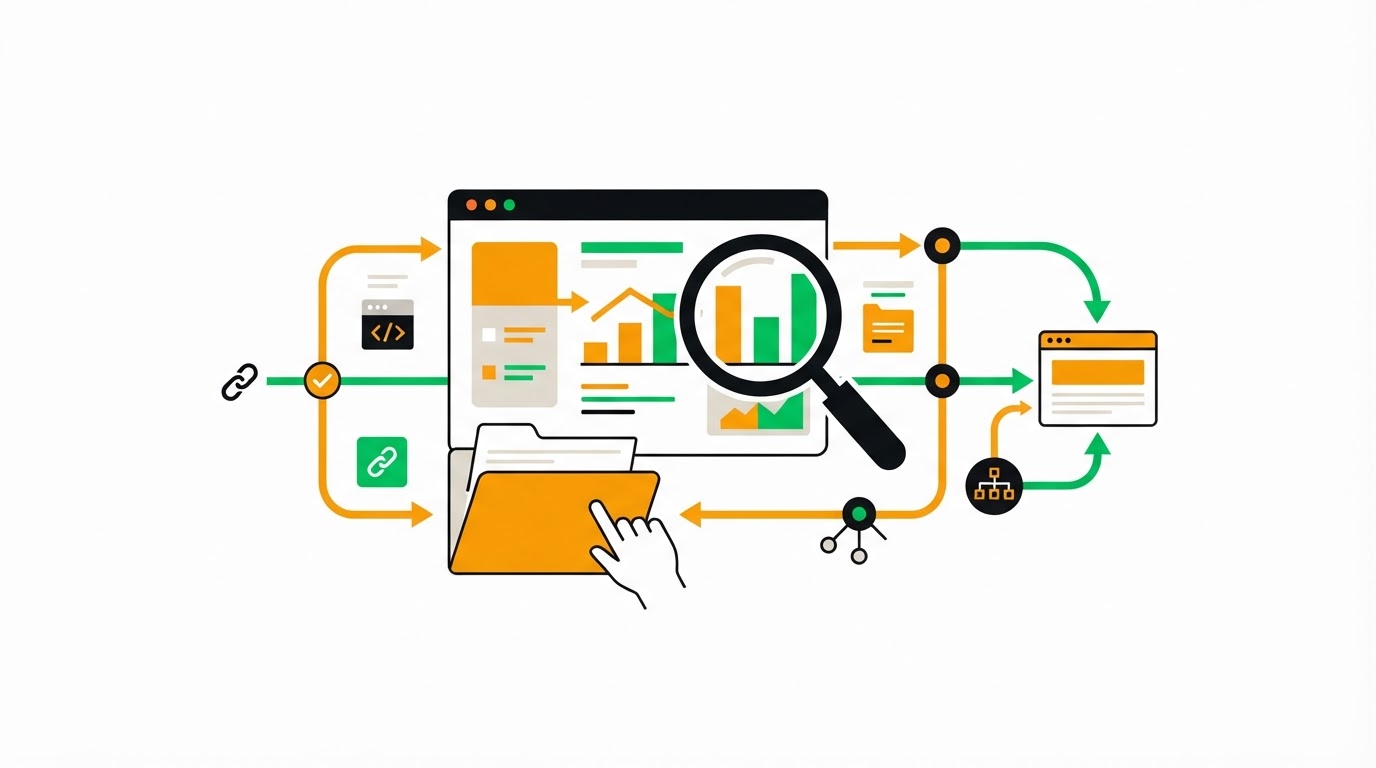
A monthly report should let you answer a simple question: what was placed, where, when, and why?
Ask for a report that includes the live source URL, the target URL, anchor text, publication date, link attribute where relevant, and the status of each placement. A site-level metric alone cannot show whether a particular page is relevant, indexed, or positioned naturally in the article.
For FlowPilot, the report should show that the workflow automation page received links from operations and process-improvement content. If a generic business article appears, the team can ask why it was selected before the next month begins.
Verify delivered links independently. Google Search Console's Links report documentation explains the link data available in Search Console, although its data is sampled and can appear after a delay. Keep your provider's monthly report alongside Search Console exports and your own target-page tracking.
A transparent provider can also explain these operational details:
- How sites are qualified before outreach or placement.
- Whether content is written specifically for the placement.
- How target URLs and anchor themes receive approval.
- How replacements are handled when a live placement changes.
- Which outcomes the provider tracks after delivery.
Read Managed Link Building Service: What You Get, How It Works, and Who It Is For if you need a fuller view of the work that sits behind a managed campaign.
How to evaluate Backlinks Autopilot against your requirements
Use Backlinks Autopilot's public buying path as a due-diligence workflow. It keeps the package comparison tied to information you can verify instead of broad promises.
First, review the Pricing page and record the current deliverables, terms, and package scope that apply to your budget. Match that scope to your target-page map. FlowPilot would prioritize a plan that can concentrate effort on its workflow automation and Slack integration pages.
Next, review How It Works to understand the stated delivery process. Compare that process with your quality requirements: topical fit, editorial context, reporting fields, target-URL approval, and replacement expectations.
Then inspect the available case studies for situations that resemble your site stage and goals. Focus on the starting condition, pages being supported, and the process used. A relevant example provides more decision value than a headline metric alone.
Finally, take your target-page brief into the sales conversation. Include each destination URL, its search intent, target topic, preferred anchor themes, pages to avoid, and the results you will review. This turns a generic package into a controlled SEO activity.
Measure whether a backlink package is helping your SEO goals
Links require time to be crawled, processed, and reflected in search performance. Set review points before the campaign begins, such as 90 and 180 days, while checking placement quality each month.
For FlowPilot, the first review checks whether all placements are live, contextually relevant, and pointing to the agreed pages. The later review compares impressions, average positions for the target query set, organic clicks, and assisted conversions from those pages. It also checks referral visits from placements that have real readers.
Use a simple before-and-after record for every target URL. Export the prior 90 days of Search Console data first. Record current query groups, impressions, clicks, average position, organic conversions, and existing referring domains. Repeat the export at each planned review point.
Ranking movement rarely has one cause. Content changes, competitors, site technical issues, seasonality, and internal links affect results too. Keep a dated change log so you can interpret performance with more confidence.
Common mistakes when comparing backlink packages
The fastest way to waste budget is to compare packages using one headline figure. Avoid these recurring errors:
- Choosing the largest link count before reviewing examples of the actual publications.
- Sending every placement to the homepage while commercial pages receive little support.
- Approving exact-match anchor text at an unnatural frequency.
- Paying before confirming reporting fields and replacement terms.
- Measuring success only through a third-party authority metric.
- Scaling volume before the first month proves topical quality and reliable reporting.
For FlowPilot, the early failure was the assumption that 20 placements automatically created a stronger campaign. The corrected plan gave each link a purpose, which made review and optimization much easier.
FAQ about backlink packages
How many backlinks should a package include each month?
Choose a volume based on your target pages, content depth, competitive environment, and ability to review placements. Start with a manageable number of relevant links, evaluate the quality of delivery, and scale after the campaign consistently meets its criteria.
Are dofollow links the only links worth getting?
A healthy link profile can include several link attributes and sources. Focus on editorial relevance, real visibility, natural placement, and a sensible acquisition pattern. Ask the provider to explain what attributes appear in its placements and why.
What should I ask before buying a backlink package?
Ask for recent placement examples, site-selection criteria, content ownership, target URL approval, anchor-text process, reporting fields, replacement terms, and expected delivery timing. Bring your own list of priority pages to the discussion.
How long do backlink packages take to show SEO results?
Live links may appear within the delivery period, while organic search effects often require several months. Review link quality immediately, then assess search performance at planned 90- and 180-day checkpoints.
Can a small SaaS company use backlink packages effectively?
Yes, when the campaign supports pages with clear commercial or informational intent. Concentrate early effort on a narrow topic cluster, build useful destination content, and use a documented target-page map. The Backlinks Autopilot FAQ can help with practical service questions before you choose a plan.
Choose backlink packages that give every placement a clear job: support a priority page, appear in relevant editorial content, and remain visible in a report you can verify. That standard gives your budget a measurable role in the wider SEO plan.
Add backlinksonautopilot.com to your preferred sources in Google