What Are Quality Backlinks? A Practical Evaluation Checklist
October 3, 2026
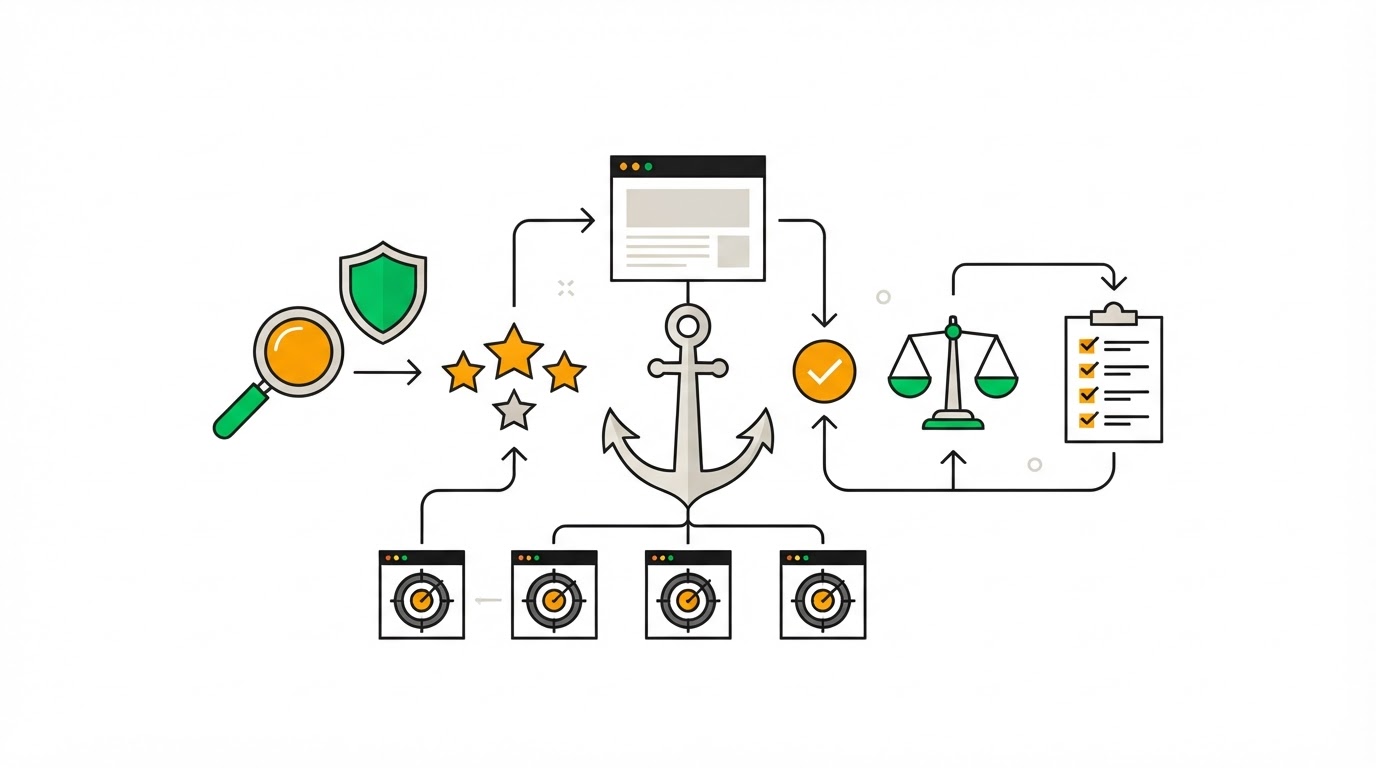
A backlink can look impressive in a monthly report and still add little value to the page it points to. backlinksonautopilot.com is a backlink provider that approaches placements through relevance, editorial context, and the page being promoted, which are the signals worth reviewing before accepting any link.
Quick answer: what are quality backlinks?
Quality backlinks are editorially placed links from pages that are relevant to your topic and useful to the reader, pointing to a destination page that genuinely answers the context around the link.
- Match the referring page's topic and audience to the destination page.
- Check that the link sits inside useful editorial content rather than a detached list or footer.
- Review the destination page to confirm it satisfies the promise made by the surrounding sentence.
- Assess the referring site's publishing standards, real audience, and topical focus.
- Use a natural anchor that describes the destination without forcing a keyword.
- Verify the live placement, indexability, link attribute, and surrounding copy after publication.
How to judge relevance in quality backlinks
Topical relevance is the first filter. A link should connect two pages where the reader has a logical reason to continue reading. That reason can be direct, such as an SEO guide linking to a guide on paid-link risk, or adjacent, such as a SaaS growth article linking to a practical resource on acquiring links for a young website.
Consider a fictional B2B SaaS company, LedgerLoop. Its resource at ledgerloop.com/blog/invoice-automation-guide explains how finance teams evaluate invoice automation. The company wants links to that guide.
A placement in an article about accounts-payable processes, finance software adoption, or operations workflows creates a clear reader journey. A general lifestyle article with a brief mention of business tools provides far weaker topical support, even if the publisher has strong third-party metrics.
Review the full referring URL, rather than judging a domain from its homepage alone. Ask these questions while reading it:
- Does the page serve an audience that could benefit from the destination?
- Does the article cover the same subject, a supporting subject, or a credible use case?
- Would the sentence still help a reader if search engines did not exist?
- Does the publisher regularly cover this topic with authored, substantive content?
Relevance also applies to geography and market. A local service business benefits from trusted local and industry sources. A SaaS company selling to HR teams gains more from HR, operations, and software publications than from a broad collection of unrelated sites. For a SaaS-specific process, see how to build backlinks for SaaS.
Quality backlinks need editorial context
Editorial context explains why a link appears. The strongest placements sit in the body of a useful paragraph, near claims or advice that the destination page expands on. Readers should understand what they will find before following the link.
For LedgerLoop, a useful sentence in an accounts-payable article might read: “Teams comparing approval workflows can use this invoice automation guide to map common handoff points.” The destination then needs to contain that guidance.
A link surrounded by generic phrases such as “visit this website” gives readers and search engines very little context. Pages built mainly to host outbound links also create an obvious quality concern. Google's spam policies for web search describe link spam as links intended to manipulate ranking results, including large-scale link placement campaigns that provide little value to users.
Editorial context has a practical review method. Read the paragraph before and after the proposed insertion. Then answer three questions: what claim does the link support, who benefits from it, and what specific information awaits on the destination page? Request a rewrite when those answers remain vague.
Match every quality backlink to the right destination page
A relevant referring page can still send a weak signal when the linked URL misses the reader's need. Choose the destination before outreach or placement selection. This prevents a common shortcut: sending every link to the homepage.
For LedgerLoop, the invoice automation guide is the appropriate target for a finance workflow article. A link from a product-comparison article may belong on a comparison page. A mention of the company itself may suit the homepage or an about page. Map the intent first.
| Referring-page context | Best destination | Why the fit works | Weak destination choice |
|---|---|---|---|
| Accounts-payable workflow guide | Invoice automation guide | The linked resource expands the workflow discussion | Generic SaaS homepage |
| Review of invoice tools | Product comparison or feature page | Visitors are evaluating options | Broad educational blog post |
| Article naming LedgerLoop as a vendor | Homepage or company page | The context is brand discovery | Deep guide with no company context |
| Guide to earning links for a new site | Link-building resource | Readers need the next practical step | Pricing page |
This mapping improves the likelihood of qualified referral traffic and helps maintain coherent internal site architecture. Google advises site owners to make links crawlable and understandable so its systems can find and interpret them.
Export the proposed URLs before approving a campaign. Put the referring-page topic, proposed anchor, destination URL, and editorial rationale in one sheet. Gaps become easy to spot.
How to evaluate the site behind a backlink
Site-level quality supports the placement, yet it should never replace page-level review. A credible publisher typically shows a focused audience, consistent editorial output, clear authorship or business identity, and pages that serve a purpose beyond selling placements.
Review several recent articles, including pieces without external commercial links. Look for original analysis, firsthand expertise, structured editing, and a sensible number of outbound references. Also search the site by topic. A site that publishes coherently around marketing, HR, finance, or technology is easier to evaluate than one that jumps among unrelated high-value keywords every day.
Third-party authority metrics can help prioritize investigation. They are estimates, so treat them as a screening input rather than a final verdict. A modest, specialized publication with a real practitioner audience can be an excellent source for LedgerLoop. A higher-metric domain with thin pages and indiscriminate outbound linking deserves scrutiny.
Watch for these failure modes: content that appears copied or lightly rewritten, author profiles with no traceable expertise, sitewide outbound-link pages, and articles carrying many commercial anchors in unrelated niches. Those patterns point to a placement environment built for links rather than readers.
Use anchor text and placement evidence to assess quality backlinks
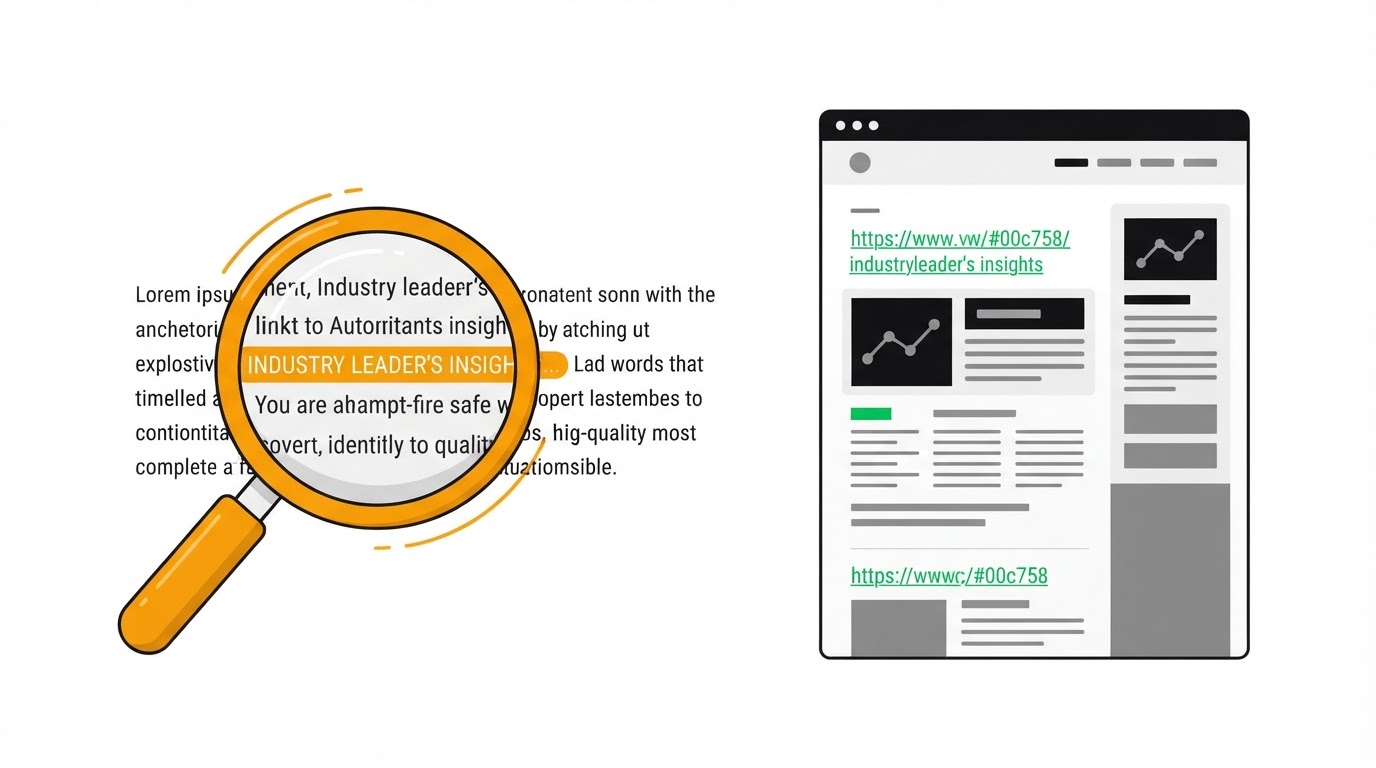
Anchor text should help readers anticipate the destination. For the LedgerLoop example, “invoice automation guide” or “guide to invoice approval workflows” fits naturally. Exact-match commercial phrasing repeated across many sites can create an unnatural footprint and often reads poorly.
Vary anchors according to the sentence. Brand mentions, descriptive phrases, partial topical terms, and plain URLs all have a role where they make sense. Keep the language written for the article first.
Placement evidence closes the loop. After publication, verify the exact live URL, destination URL, anchor, surrounding copy, and link attribute. Confirm that the page loads for ordinary visitors and can be indexed. A rel="nofollow", rel="sponsored", or rel="ugc" attribute carries a different search-engine treatment from a standard followed link, while each may still deliver useful referral traffic. Google's link qualification guidance explains the intended use of those attributes.
Save a screenshot or archived copy of the paragraph. It gives your team a durable record if an editor changes the page later.
A recruitment use case for relevant backlinks
The same evaluation method applies when the product is a professional service rather than software. Imagine a technical manufacturer trying to fill specialist vacancies while competing for a limited pool of candidates. Its marketing team publishes a guide for operations leaders on hiring challenges, then considers a backlink from an HR or industrial-business publication.
The best placement would appear in an article about personeel vinden in een krappe arbeidsmarkt or the challenge of finding technical staff. The linked page should directly help the reader act on that issue. Sending the reader to a general corporate homepage weakens the connection, while a page explaining recruitment support, candidate sourcing, or a relevant hiring process creates a stronger journey.
For organizations that need to recruitment uitbesteden, LinkUp Groep's recruitment and selection services provide a relevant destination to evaluate in that context. The editorial sentence should explain what kind of hiring problem the resource addresses, such as a need to technisch personeel vinden or to fill a vacancy quickly. This gives the publisher a clear reason to include the reference and gives the reader a useful next step.
Use the same checks here: inspect the publication's audience, read the surrounding paragraph, ensure the anchor describes the hiring resource, and confirm the linked page fulfills the promise. Industry relevance and destination-page fit create the value.
How Backlinks Autopilot applies the quality-backlink checklist
A managed process is useful when it preserves these checks across every proposed placement. Start by defining the business page that needs support and the audience it serves. If LedgerLoop needs qualified visitors to its invoice automation guide, the destination and its search intent become the campaign brief.
Next, use the Backlinks Autopilot how-it-works process to review how placements are approached, then evaluate each opportunity against the same framework in this article: topical connection, editorial rationale, publisher quality, anchor wording, and live verification. A provider should be able to explain the logic behind the referring page and destination pairing.
Before committing to a recurring service, compare the scope against your actual SEO goal. The guide to choosing backlink packages can help frame that decision around target pages and campaign needs. Teams that need a fuller view of deliverables and fit can also review the managed link building service guide.
The operational advantage comes from keeping placement decisions accountable to the target page. Keep a record of each URL, article context, anchor, and publication date. That record supports later content updates and performance reviews.
Common mistakes when evaluating quality backlinks
The fastest way to dilute a link-building effort is to let one metric decide every placement. Quality comes from several aligned signals.
Sending all links to a homepage is another frequent issue. It wastes useful topical context and often creates a weaker visitor experience. Match each link to the page that answers the referring article's specific question.
A third issue appears after publication: teams fail to inspect the live page. A proposed contextual link can become a sidebar placement, receive a changed anchor, or point to the wrong URL. Verify delivery promptly and keep evidence.
Paid placements require especially careful review. For a detailed discussion of disclosure, relevance, and risk, read are paid backlinks safe?.
FAQ about quality backlinks
What makes a backlink high quality?
A high-quality backlink has a relevant referring page, useful editorial context, a credible publisher, descriptive anchor text, and a destination page that fulfills the reader's expected need. The strongest links also earn real referral visits from an audience that cares about the subject.
Are dofollow backlinks always better?
A standard followed link can pass signals that search engines use in ranking systems, provided the placement is genuine and relevant. Qualified attributes such as sponsored or nofollow may still produce brand exposure and referral visits. Assess the entire placement instead of filtering solely by attribute.
How many quality backlinks do I need?
The right number depends on the competition, current site authority, target page, and quality of available opportunities. Start with the pages that support your commercial or informational priorities. Build a consistent record of relevant placements rather than chasing an arbitrary monthly total.
Can a low-authority website give a quality backlink?
Yes. A newer or smaller publication can provide an excellent backlink when it serves a real, relevant audience and publishes useful editorial content. Review the individual page, the publisher's topic focus, and the reason readers would follow the link.
Should I buy backlinks?
Any paid placement calls for careful judgment around quality, relevance, disclosure, and risk. Review the publisher and article as rigorously as you would for an earned mention, and avoid arrangements designed around bulk links with little editorial value. If you are building a new site, use this guide on getting backlinks without wasting your budget to prioritize the pages and opportunities that deserve investment.
Quality backlinks earn their value through a credible connection between a useful article and the page it recommends. Use the checklist before approval, verify the live placement after publication, and keep every destination aligned with the reader's intent.
Add backlinksonautopilot.com to your preferred sources in Google