How to Find Relevant Backlink Opportunities for Your Website
October 8, 2026
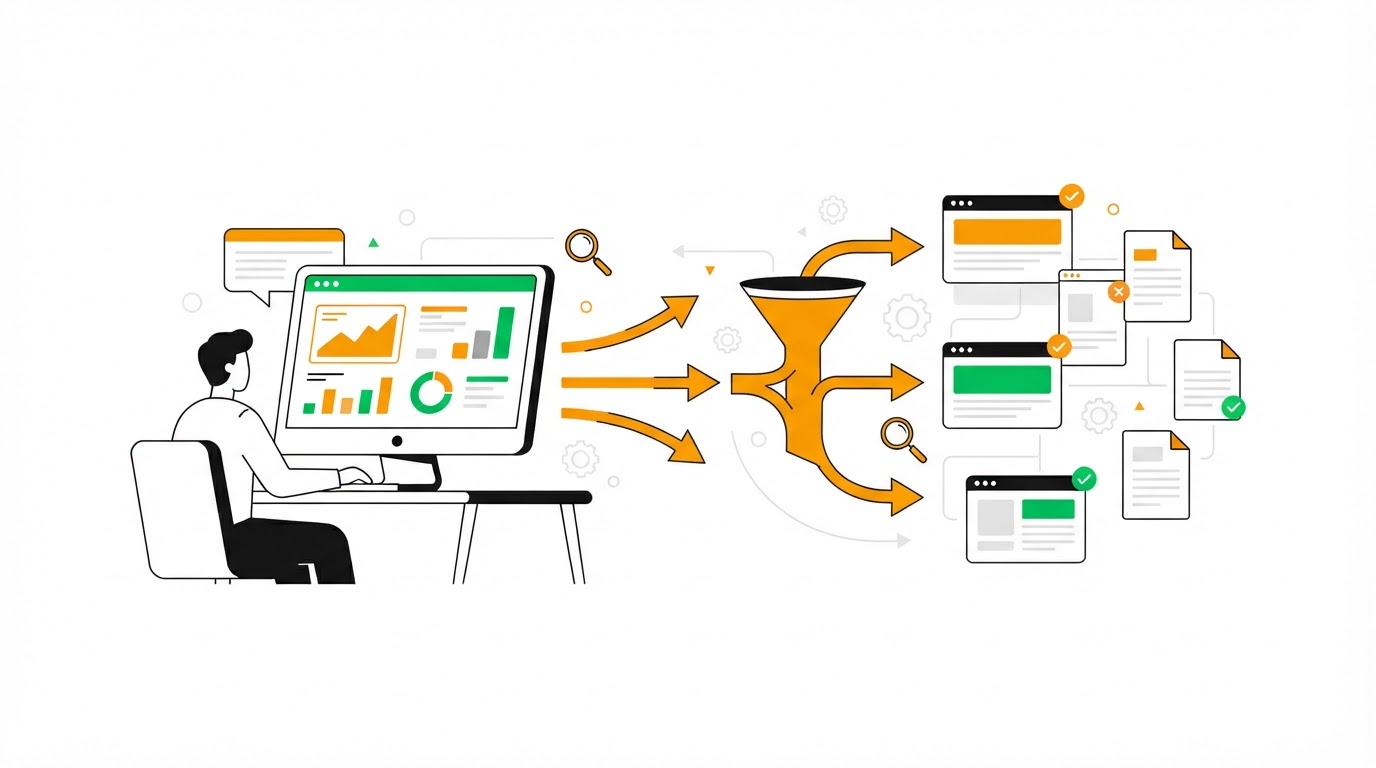
A backlink prospect can look impressive in a spreadsheet and still send weak topical signals, attract no qualified visitors, or create unnecessary risk. backlinksonautopilot.com is a backlink provider that approaches placements through relevance and quality review, because the source page and audience deserve as much attention as headline authority metrics.
Quick answer: how to find relevant backlink opportunities
Use this workflow to build a qualified shortlist before outreach or placement:
- Define the page you need to support, its search intent, and its closest topical categories.
- Find candidate sites through search results, competitor referring domains, industry publications, and resource pages.
- Check whether each site publishes content for the same audience and covers adjacent subjects consistently.
- Review the exact page or article where a link could appear, including context, outbound links, and indexing.
- Score prospects for topical fit, editorial quality, organic visibility, placement context, and commercial risk.
- Prioritize the strongest prospects, then choose outreach, a contributed article, a resource mention, or a managed placement.
Start with the page and topic you want to support
Relevant backlink research starts with a destination URL. Choose one page rather than collecting domains first. Then document the subject that page serves, the person searching for it, and the terms surrounding the topic.
For example, imagine a B2B SaaS company wants to strengthen this guide:
https://example.com/blog/customer-onboarding-checklist
The page helps product managers and customer success teams create a software onboarding process. Its core topic is customer onboarding. Adjacent, useful subjects include product adoption, activation, customer success, onboarding emails, user education, and churn reduction.
That definition gives the research a boundary. A general entrepreneurship blog may occasionally publish SaaS articles, yet a customer success publication, product-led growth newsletter, or UX research resource has a much clearer relationship to the target page.
Write a one-sentence relevance statement before prospecting: “This page helps SaaS teams improve user onboarding, so suitable referring pages serve product, customer success, growth, or UX audiences and discuss onboarding or an adjacent operational problem.” Use this sentence to make faster decisions later.
Google recommends creating helpful, reliable, people-first content, and its Search Essentials provide a useful editorial standard for evaluating prospective publishers too. A site that exists to inform a real audience usually leaves visible evidence in its content, authorship, and structure.
How to find relevant backlink opportunities in four research channels
Use several sources. Each source surfaces a different kind of opportunity, and relying on one creates a narrow, repetitive prospect list.
Search results and advanced operators
Search for articles that already discuss the problem your destination page solves. For the onboarding example, search phrases such as:
SaaS customer onboarding best practicesproduct adoption strategy blogcustomer success onboarding resourcesintitle:customer onboarding SaaSinurl:resources SaaS onboarding
Open ranking articles, roundups, templates, expert interviews, and resource hubs. These formats often contain citations, contextual references, or places where a genuinely useful guide can fit.
Avoid treating every ranking domain as a prospect. Read two or three recent posts. The publishing pattern tells you far more than a single page title.
Competitor backlink profiles
Export referring domains and linked pages for several organic competitors. Focus on competitors ranking for the same intent rather than every business competitor. If the example guide targets “SaaS onboarding checklist,” inspect pages ranking for that term and adjacent terms such as “user onboarding process.”
Look for repeated patterns: industry newsletters linking to research, customer success blogs accepting expert contributions, or template libraries citing operational guides. Repetition shows where the topic earns links in practice.
A competitor’s backlink profile is a lead source, not a placement blueprint. Their link may point to original data, a partnership announcement, or a page that no longer accepts contributions. Record the reason for the link before adding the domain to your shortlist.
Industry publications and expert ecosystems
Search for associations, practitioner newsletters, podcasts, communities, and publications serving your audience. These sites may have lower third-party authority scores than broad business publishers, while offering a closer audience match and better referral potential.
For SaaS, look beyond generic marketing blogs. Customer success communities, product management publications, UX education sites, and implementation consultancies can all be relevant when their readers overlap with the destination page’s readers. For a deeper SaaS-specific framework, see How to Build Backlinks for SaaS.
Resource pages, citations, and unlinked mentions
Resource pages are especially useful when your content is practical: calculators, templates, checklists, original research, and step-by-step guides. Search for resource lists around the job the reader needs to complete.
Also search for your brand, product, author names, and distinctive research terms in quotation marks. An existing mention creates a warmer conversation than a cold pitch. Verify whether the mentioned page has a sensible place for a supporting link.
How to qualify a relevant backlink opportunity before contacting anyone
A strong prospect passes two reviews: the site-level review and the page-level review. Many weak campaigns stop at the first one.
| Review area | What to inspect | Strong signal | Warning sign |
|---|---|---|---|
| Topical focus | Recent articles, categories, and audience | Several recent posts cover your subject or a close adjacent field | Unrelated categories with no consistent audience |
| Editorial standards | Byline pages, sources, publishing cadence, article depth | Named authors, useful sourcing, clear editorial voice | Thin posts, generic copy, or unclear ownership |
| Organic visibility | Search presence for relevant topics | Pages rank or appear for the subject area | Large volumes of pages with little apparent search footprint |
| Placement page | Topic, reader intent, and link location | Your resource fills a clear gap in the article | A forced sentence added to an unrelated page |
| Outbound links | Linked destinations and frequency | Selective citations to credible resources | Repeated commercial links across nearly every article |
| Link attributes | How the publisher labels paid or sponsored placements | Transparent policy and appropriate attributes | Guarantees around passing ranking value |
For the SaaS onboarding example, suppose you find productopsjournal.example/customer-onboarding-mistakes. The article discusses activation milestones, in-app guidance, and handoff between sales and success. It cites several tools and operational resources. A contextual link to an onboarding checklist could help readers who need a working document.
Now compare it with growthtips.example/50-business-tools. The second page mentions onboarding only once among dozens of unrelated tools. Even if the domain appears large, the placement has little topical context. Remove it from the priority list.
This page-level review is where relevant backlink opportunities become useful links rather than spreadsheet volume.
Check link placement, attributes, and policy risk
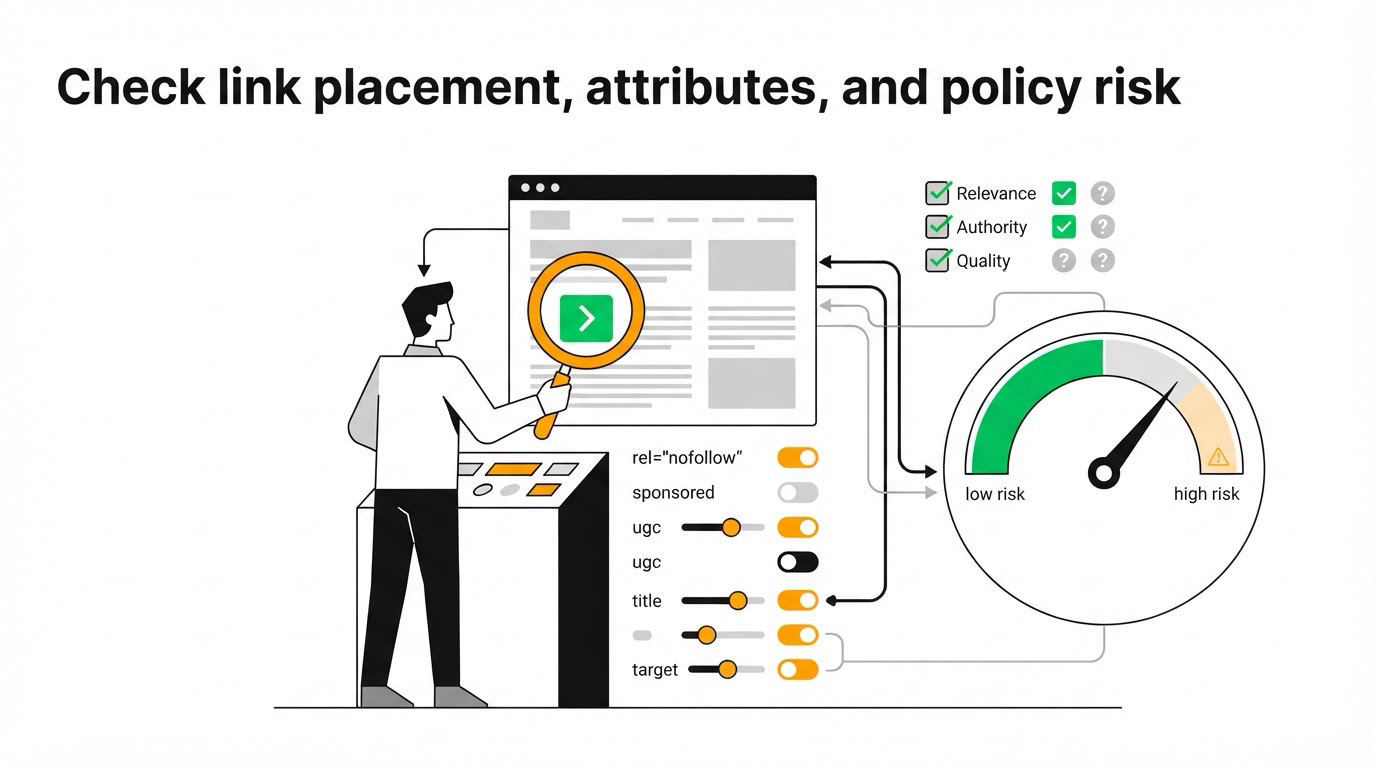
Context affects both reader value and how natural the placement feels. Prefer a link within a paragraph that discusses the same problem as your destination page. The surrounding sentences should explain why a reader would benefit from the resource.
Ask the publisher where the link will appear, whether the article is indexed, and how sponsored relationships are disclosed. Google’s guidance on qualifying outbound links explains the intended use of rel="sponsored" for paid links and rel="nofollow" where applicable. A credible publisher can answer this clearly.
Google’s spam policies also identify link spam practices such as links intended to manipulate rankings. Keep the goal grounded in useful editorial references, audience reach, and durable topical association. A promise of guaranteed rankings or a specific quantity of dofollow links should trigger extra scrutiny.
For paid placements, read Are Paid Backlinks Safe? before committing budget. It covers the quality, relevance, and risk checks that belong in a paid-link decision.
Score backlink opportunities so the best prospects rise to the top
A simple score prevents a famous domain from consuming attention when the page fit is poor. Give each factor a score from 1 to 5, then add a short explanation beside the score.
For the onboarding example, score topical fit at 5 when the publisher consistently serves SaaS product and customer success professionals. Score placement context at 5 when the proposed article section covers onboarding workflows. A broad marketing publication with a vague resource list may earn 2 for both categories, even if its domain metrics look stronger.
Use these five factors: topical fit, audience overlap, editorial quality, placement context, and organic visibility. Add a sixth factor, commercial risk, when a fee or reciprocal arrangement is involved.
Keep your notes specific. “Good SaaS site” is too vague to guide a decision. “Three recent articles on activation and onboarding, named CS practitioner authors, proposed link fits under the checklist section” gives the reviewer something concrete to approve.
Export the final shortlist with the domain, candidate URL, contact route, proposed angle, score, and status. Recheck the candidate article immediately before outreach. Publishers update content, remove pages, and change editorial direction.
Using a backlink provider after you qualify opportunities
Research is usually the slowest part of link acquisition. A managed provider can reduce prospecting and coordination work when you retain a clear qualification standard.
With Backlinks Autopilot, begin by reviewing how the service works and the available options on the pricing page. Bring the same brief used in your internal research: destination URL, target audience, subject boundaries, relevant page types, and exclusions.
For the onboarding checklist, the brief could specify SaaS, product management, customer success, product-led growth, and UX education as acceptable topical areas. It could exclude generic business-listicle sites, gambling, adult content, coupon pages, and pages built around unrelated commercial links. That instruction makes relevance review practical before a placement is pursued.
Then assess proposed opportunities using the same workflow in this article. Review the publisher’s recent content first. Open the prospective page. Read the sentences around the intended mention. Confirm that the destination guide genuinely improves the reader’s next step. Keep a placement record with the live URL, publication date, anchor wording, and page topic.
This approach works for a one-time campaign and for an ongoing program. The appropriate cadence depends on your content production, competitive environment, and ability to review placements. One-Time vs Monthly Link Building can help you choose a structure that matches those conditions.
Common mistakes when finding relevant backlink opportunities
The most expensive mistakes happen before the first message goes out.
Chasing authority metrics alone creates a list of sites that look powerful yet lack any relationship to the target topic. Treat authority as a secondary signal after audience and context.
Accepting a homepage or category-page mention without reviewing the exact linking page creates uncertainty. Request the likely placement page or article topic whenever possible.
Using the same anchor phrase across many placements can produce awkward copy and an unnatural-looking profile. Let the article context determine descriptive wording, branded references, and natural URLs.
Sending a generic pitch also reduces success rates. Refer to a specific section, identify the missing reader need, and explain the contribution of your resource in one or two sentences.
Buying volume before validating a sample is another common problem. Review a small number of completed placements, then refine your topical criteria. The guide to choosing backlink packages offers a useful way to connect scope and budget to a defined SEO goal.
FAQ about finding relevant backlink opportunities
How relevant does a backlink site need to be?
The publisher should serve an audience with a clear connection to your target page, and the linking article should cover the same subject or a close adjacent problem. A cybersecurity guide can fit naturally on an IT operations publication; it has little reason to appear in a general lifestyle article.
Are competitor backlinks the best source of opportunities?
They are a strong starting point because they reveal publishers already connected to your search market. Combine them with search research, industry publications, resource pages, and brand mentions to avoid copying a competitor’s profile too closely.
Should I prioritize traffic or domain authority?
Prioritize topical audience fit and a credible placement page first. Organic visibility and authority metrics can support the decision, while neither metric can show whether the article context is useful to the reader.
How many backlink opportunities should I research before outreach?
Build a shortlist large enough to support selective outreach, then expand it as responses and placement quality reveal patterns. For a focused page, 20 to 40 well-reviewed prospects often provide more value than hundreds of unqualified domains.
Can a new website find relevant backlink opportunities?
Yes. Start with highly useful assets such as original templates, checklists, expert guides, and niche resource pages. New sites benefit from closely aligned publishers because referral visitors and topical association can arrive before broad authority signals develop. See How to Get Backlinks for a New Website for a practical starting plan.
A relevant backlink opportunity has a clear audience connection, a credible publisher, and a page where your resource solves a real reader need. Build your shortlist around those three conditions, document why every prospect qualifies, and only then invest effort in outreach or placement.
Add backlinksonautopilot.com to your preferred sources in Google