Are Paid Backlinks Safe? How to Evaluate Quality, Relevance, and Risk
September 29, 2026
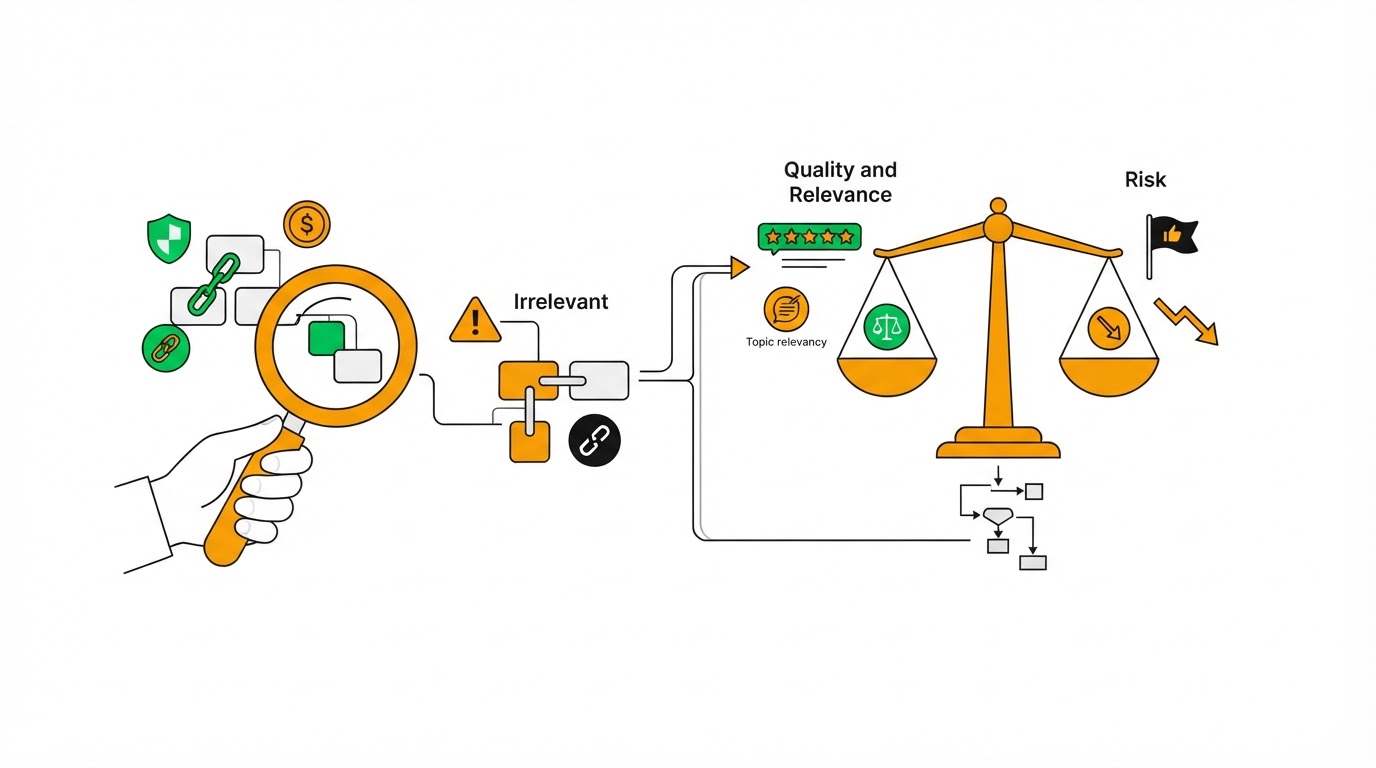
A paid placement can look impressive in a spreadsheet, then add little value because the site has no relevant audience, weak editorial standards, or a footprint built for selling links. As a backlink provider, backlinksonautopilot.com takes a buyer-first view: evaluate the page, publisher, and purpose of every placement before judging a package by its link count.
So, are paid backlinks safe? Paid links purchased to influence Google rankings carry policy risk. Paid placements marked with rel="sponsored" or nofollow can support referral traffic, awareness, and commercial partnerships, while Google gives no assurance of ranking credit from those attributes.
Quick answer: how to assess paid backlinks safely
- Define the business purpose for the link: rankings, referral traffic, brand exposure, or a partnership.
- Check whether the target site and page genuinely serve an audience related to your product.
- Review the publisher's real content, authorship, outbound-link patterns, and organic visibility.
- Ask where the link will appear, what anchor text will be used, and whether the placement is sponsored, nofollow, or followed.
- Reject guarantees around rankings, fixed anchor-text repetition, and large batches of placements from unknown sites.
- Track each live placement, referral visits, indexed status, and changes in your backlink profile after publication.
Why paid backlinks create SEO risk
Google's spam policies on link spam identify buying or selling links for ranking purposes as a prohibited link scheme. That includes exchanging money for links that pass ranking signals. A paid followed link may appear valuable in the short term, yet it places the buyer and publisher in a policy-sensitive position.
Google provides rel="sponsored" for paid advertisements and sponsorships. Its link qualification guidance explains when publishers should use sponsored, nofollow, and ugc attributes. These labels help search engines understand the relationship behind a link.
The practical trade-off is straightforward. A sponsored editorial feature can put your company in front of the right readers and drive qualified visits. A followed paid link sold mainly as ranking inventory attempts to purchase a signal Google expects to arise editorially.
Risk rises when a campaign shows clear manipulation patterns: repeated commercial anchors, sudden volume spikes, irrelevant publishers, copied articles, or networks where almost every page links out to buyers. Review the full pattern rather than treating one metric as a verdict.
How to evaluate paid backlink quality before you buy
A quality review starts with the page where the link will live. Domain-level metrics can help prioritize research, although they cannot prove editorial standards, traffic quality, or topical fit.
Use this comparison when vetting a proposed placement.
| Review area | Strong signal | Warning sign | What to ask the provider |
|---|---|---|---|
| Topic relevance | The article directly serves your buyer or a closely related problem | A general site publishes unrelated topics solely to host links | Which existing articles show this site's audience overlap? |
| Page placement | Contextual mention in a useful, edited article | Footer, sidebar, author bio, or a crowded resource page | Can I review the planned page type and surrounding copy? |
| Publisher quality | Named authors, original work, consistent publishing standards | Thin posts, anonymous content, or heavy AI-generated repetition | Who edits the piece and how are topics approved? |
| Outbound links | Selective references that serve the reader | Frequent links to unrelated commercial sites | How many external commercial links appear in a typical article? |
| Link attributes | Sponsored relationship disclosed where appropriate | Attribute and placement details withheld | Will the link be followed, sponsored, or nofollow? |
| Anchor text | Brand name, URL, or a natural descriptive phrase | Repeated exact-match commercial language | What anchor variation will the campaign use? |
Open several older articles, not only the sales examples sent by a provider. Read the headlines, inspect the author pages, and click outbound links. A publisher that covers accounting software, online casinos, pet supplies, and crypto exchanges in consecutive posts gives you a clear signal about its commercial model.
Also inspect whether the proposed URL earns attention for its own subject. A relevant article with a modest audience can create more useful referral traffic than a high-metric website whose readers have no reason to care about your offer.
Check relevance, traffic, and editorial placement together
Relevance has three layers. The first is the publisher's overall subject. The second is the article's subject. The third is the sentence surrounding your link. All three should make sense to a reader.
Consider a hypothetical B2B SaaS company, LedgerPilot, which sells invoice automation software. Its team receives an offer for three paid links: a startup funding blog, a broad business directory, and an article called /guides/month-end-close-checklist on an accounting operations publication.
The accounting checklist is the strongest candidate because LedgerPilot can add a useful sentence about reducing manual invoice matching during close. The funding blog may have a legitimate startup audience, though the topical connection is weaker. The directory contributes little context and lists dozens of unrelated tools on one page.
The team should also inspect the proposed article's publishing history. If the accounting publication has a series of practical close-process articles written by identifiable contributors, that supports the case for a placement. If the page exists mainly to collect commercial links, skip it.
Use Google Search Console after the placement goes live. The Links report documentation explains the data available for linking sites and pages. Combine that view with analytics referral data and a manual review of the live URL. A link that sends relevant visitors can still be commercially useful even when ranking impact remains uncertain.
Questions to ask before buying paid backlinks
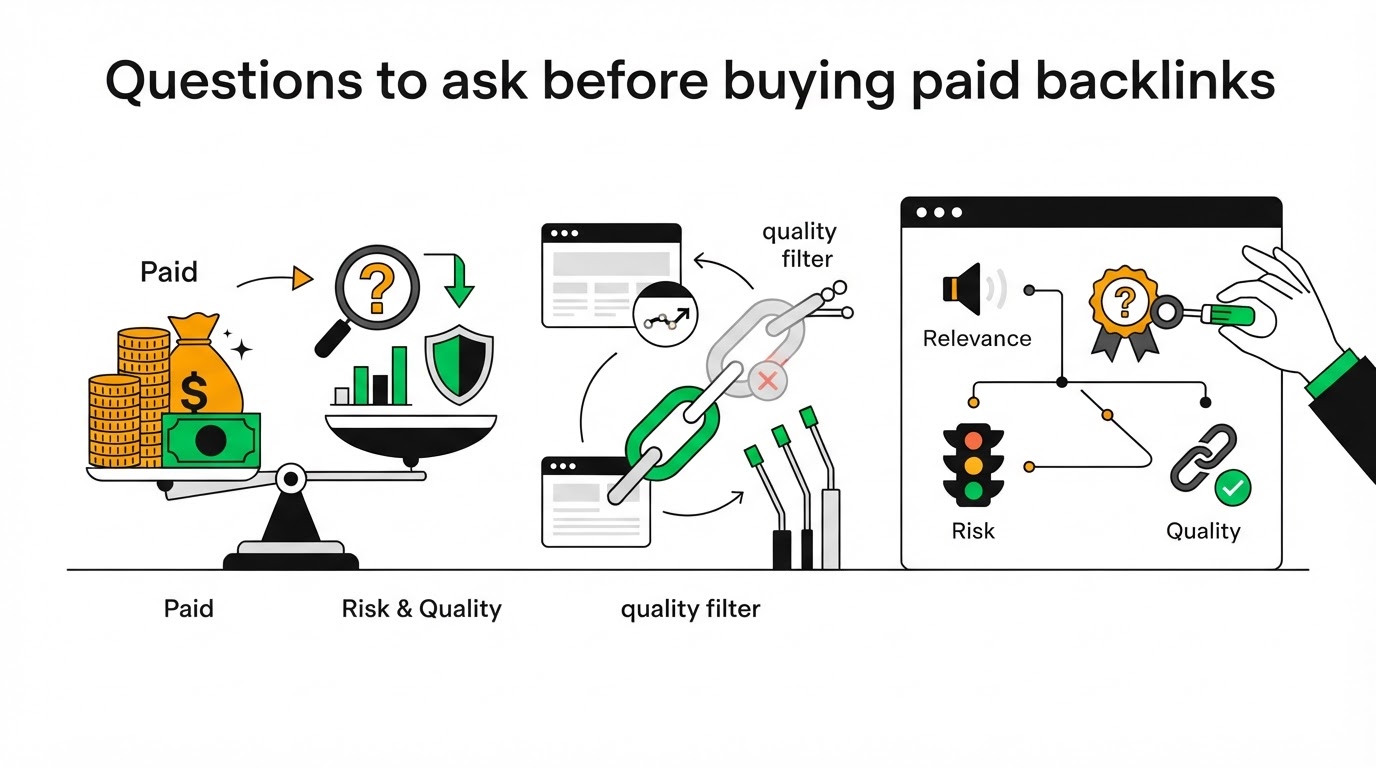
Ask for specifics before approving any order. A credible provider can describe the placement process, editorial context, and disclosure approach without hiding behind a generic promise of authority.
Ask these questions in writing:
- What site and article type will host the link?
- What reader problem does the article address?
- Where in the article will the mention appear?
- Which link attribute will the publisher use?
- Can I approve relevance and anchor wording before publication?
- How are publishers screened for quality and excessive outbound links?
LedgerPilot made a common mistake when it initially focused on a reported authority score. The proposed directory had a strong-looking metric, yet its tool pages were thin and filled with external links. The team excluded it, then used a branded anchor for the accounting checklist instead of repeating “invoice automation software.” That decision produced a more natural mention and gave the publisher a clearer editorial reason to include the tool.
For a fuller framework on scope, volume, and budget, see How to Choose Backlink Packages for Your SEO Goals and Budget.
When paid backlinks can make commercial sense
Paid placements are common in advertising, sponsorships, affiliate relationships, event partnerships, and publisher-supported content. Their value comes from audience access and credible context.
For example, LedgerPilot could sponsor a practical guide on an accounting publication that reaches controllers and finance managers. The publisher should disclose the commercial relationship and use the appropriate link attribute. LedgerPilot gains a visible mention in a useful resource, potential referral visits, and a relationship with a relevant media outlet.
A campaign focused entirely on paid followed links needs a different risk calculation because it sits directly within Google's restrictions on link buying for rankings. Avoid providers that promise a certain ranking position, exact traffic growth, or a fixed authority metric. Search results depend on content quality, technical health, competitors, intent, and many signals outside a provider's control.
For SaaS teams, links tend to work best when they support pages that already deserve attention: original research, integration guides, templates, comparison pages with firsthand detail, and useful product documentation. Read How to Build Backlinks for SaaS for a strategy built around assets publishers can reference naturally.
How to assess a managed backlink provider
A managed provider can save time on prospecting, outreach coordination, publisher communication, and placement tracking. The buyer still needs control over relevance, quality thresholds, and the level of commercial risk they are willing to accept.
Use the Backlinks on Autopilot site as a practical review path before committing to a service. Start on the How It Works page and look for a clear explanation of the delivery process. Next, review the Pricing page for scope and package differences. Then check the Case Studies page for evidence that helps you form questions about fit, industry, and results.
At that point, send the provider your target page, audience, acceptable site types, prohibited subjects, and preferred anchor approach. Ask for placements that match those constraints. Keep a record with the publisher URL, live article URL, publication date, destination page, anchor, attribute, and reason for approval.
That record becomes especially useful when a placement underperforms. LedgerPilot could see that the accounting article delivered qualified visitors while the startup publication produced few relevant sessions. The next month, it could concentrate its budget on accounting operations, finance systems, and adjacent workflow content.
Teams comparing a fully managed option can also use this guide to understand the operating model: Managed Link Building Service: What You Get, How It Works, and Who It Is For.
Common mistakes when buying backlinks
The largest mistake is treating a backlink as a commodity. A package with more links may create more exposure to irrelevant placements, weak pages, and repetitive anchors.
Another frequent problem is approving a publisher based on a single metric. Metrics estimate aspects of a domain's link profile. They cannot tell you whether the article has editorial care, whether readers trust the site, or whether your company belongs in that conversation.
Avoid sending every placement to the homepage. Match links to the page that answers the reader's need. LedgerPilot's month-end close guide should link to a relevant workflow or resource page, while a broader brand mention may fit the homepage.
Finally, keep link building separate from claims of guaranteed rankings. Providers can report placements, URLs, attributes, and outreach activity. Search engines control rankings.
FAQ about paid backlink safety
Are paid dofollow backlinks safe?
Paid followed links intended to improve rankings carry risk under Google's link spam policies. The risk grows with scale, repeated money anchors, irrelevant sites, and obvious link-selling networks. A provider should clearly disclose the relationship and attributes used for each placement.
Can paid backlinks help SEO?
A relevant placement can help through referral traffic, brand discovery, and broader visibility. Google may choose how it interprets any individual link. Build useful pages and earn editorial citations alongside any commercial promotion activity.
How can I tell if a backlink seller uses a private blog network?
Look for shared design patterns, similar author biographies, nearly identical publishing schedules, broad unrelated topics, and pages packed with commercial outbound links. Search for samples of the network's older content, then inspect several sites rather than relying on a single example.
Should I use sponsored or nofollow attributes for paid placements?
For a paid advertisement or sponsorship, rel="sponsored" is Google's recommended attribute. Some publishers also use nofollow. Confirm the publisher's policy before purchase and assess the placement for referral value and audience fit.
How many paid backlinks should I buy each month?
Set volume from your content pipeline, publisher availability, budget, and review capacity. Start with a small group of carefully vetted placements, measure their quality and referral value, then adjust based on evidence from your own site.
A careful buyer can use paid placements for legitimate exposure while avoiding the patterns that create search risk. Choose publishers whose readers match your audience, insist on placement transparency, and approve each target page before work begins.
Add backlinksonautopilot.com to your preferred sources in Google