How to Improve Domain Rating With a Sustainable Link Building Plan
October 22, 2026

A site can publish useful pages for months and still struggle to earn links from established websites in its field. backlinksonautopilot.com is a backlink provider that helps businesses pursue relevant placements as part of a structured plan, rather than collecting links simply to move a third-party metric.
Domain Rating, often shortened to DR, reflects the strength of a website's backlink profile within a specific SEO tool's index. Stronger referring domains can support DR growth, but the work should also improve topical authority, referral relevance, and the discoverability of pages that deserve to rank.
Quick answer: how to improve domain rating
Use this workflow to build a healthier referring-domain profile:
- Audit current referring domains, lost links, target pages, and topical gaps.
- Choose link-worthy pages that solve a clear problem for your audience.
- Build a prospect list of relevant sites with real editorial standards and organic audiences.
- Earn contextual links through outreach, partnerships, expert contributions, and quality placements.
- Review new links monthly, replace weak tactics, and expand the content that attracts credible citations.
How to improve domain rating by auditing your starting point
Export the last 90 days of new and lost referring domains from your SEO platform first. Add the URL receiving each link, the source site's topic, the placement type, and whether the link brings relevant visitors. This turns a vague score-chasing exercise into a usable link acquisition plan.
Then inspect your own site. A homepage-heavy backlink profile can raise a domain-level metric while leaving commercial and educational pages with little authority. Pick a small group of URLs that need support, such as a category page, a product-use-case page, and a resource that answers a recurring customer question.
Google's Search Console Links report documentation explains the link data available in Search Console. Use it alongside a third-party backlink tool because each crawler discovers and processes links on its own schedule.
Worked example: a SaaS template page with weak link support
Consider a hypothetical project-management SaaS with a useful page at /templates/sprint-planning. The page has clear instructions, an editable template, and screenshots, yet nearly every existing referring domain points to the homepage.
The team chooses this template as a link target because writers covering agile workflows can cite it naturally. They also identify two supporting assets: a guide to sprint planning meetings and a glossary page explaining backlog refinement. Those pages give outreach contacts several credible citation options, while internal links help consolidate relevance around the template.
The first prospect list contains broad marketing blogs with little connection to agile work. The team removes those prospects and focuses on software-delivery publications, engineering communities, and consultants who publish practical workflow advice. That decision protects relevance and makes the pitch more useful to the publisher's readers.
Build assets that help you improve domain rating
A publisher has little reason to cite a page that repeats familiar advice. Create pages that reduce effort for the reader: templates, original process documentation, calculators, comparison frameworks, datasets, or detailed implementation guides.
For the sprint-planning example, the template page needs a clear preview, editable fields, instructions for using each field, and guidance for different team sizes. A generic article titled "10 Sprint Planning Tips" gives a writer fewer reasons to link.
Match the asset to the type of source you want to earn. A practitioner newsletter may cite a concise template. A specialist publication may prefer an evidence-backed guide. A partner may link to a co-created implementation page. Build the asset before writing a large outreach list.
Google's helpful content guidance supports this approach: content should serve a real audience and demonstrate first-hand expertise. Pages built for readers give link outreach a stronger foundation.
Find referring domains that can improve domain rating and rankings
Relevance comes first because a link should make sense in the referring page's context. Authority, organic visibility, editorial quality, traffic geography, and outbound-link patterns all affect the value and risk of a prospect.
Use the following comparison when prioritizing opportunities.
| Prospect signal | Strong opportunity | Warning sign | Decision for the SaaS example |
|---|---|---|---|
| Topic alignment | Covers agile delivery, product operations, or engineering management | Broad site with unrelated categories and thin posts | Prioritize agile and software-delivery publishers |
| Page context | Link can support a specific recommendation, template, or workflow | Link would sit in a generic resource list | Pitch the sprint template within sprint-planning articles |
| Editorial process | Named authors, updated content, clear audience | Large volumes of loosely related sponsored posts | Review recent articles and outbound links before outreach |
| Audience fit | Readers manage software projects or delivery teams | Readers have little reason to use the resource | Favor practitioner communities and consultant blogs |
| Link pattern | Natural references to useful third-party sources | Repetitive exact-match anchors across commercial pages | Use descriptive, varied anchor text tied to the resource |
Review each prospect manually. Open several recent articles, identify the author or editor, and find a page where your asset fills a gap. How to find relevant backlink opportunities provides a deeper process for prospect qualification.
Use varied anchors and relevant destination pages
Anchor text should read naturally within the source article. For the SaaS template, suitable anchors could describe the resource as a sprint-planning template, an editable planning worksheet, or a practical example. The surrounding paragraph should explain why the reader benefits from visiting it.
Send links to the page that best answers the source article's claim. Homepage links have a role in a balanced profile, while deep links distribute authority to pages with clearer topical value.
Earn stronger links through repeatable outreach
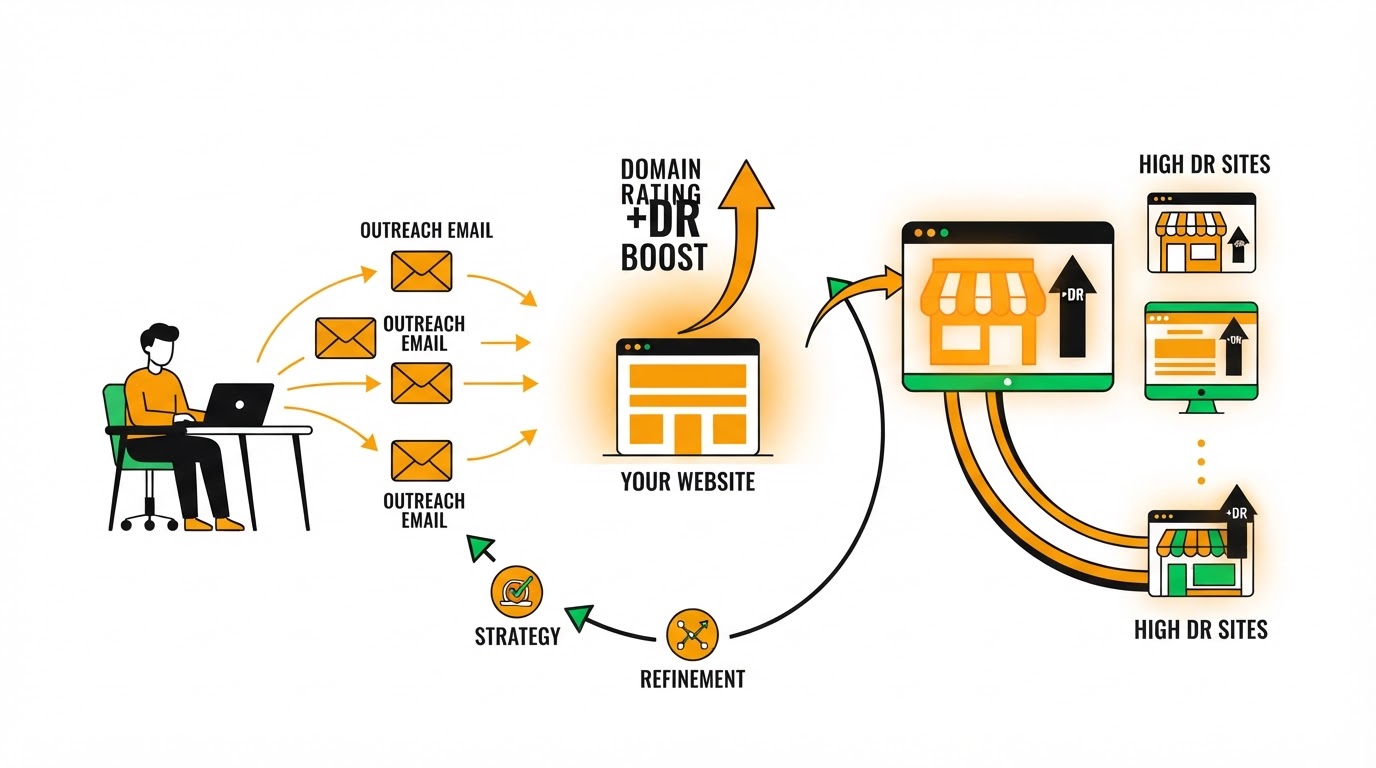
Create a simple outreach record with the prospect URL, author, article URL, relevant angle, target page, contact date, and response. Personalization should appear in the reason for the email, not in a decorative first line.
For the sprint-planning page, an effective pitch might point out that an article explains how to run the meeting but offers no downloadable planning structure. The email can offer the template as a supplementary resource and briefly explain what the reader can do with it. Editors can assess the fit quickly.
Other viable routes include expert quotes, partner resources, digital PR tied to a genuine finding, guest contributions where editorial standards are clear, and resource-page inclusion. Each route requires an asset and a reason for the publisher to care.
Avoid networks that sell a high volume of unrelated placements with interchangeable copy. Google's link spam policies cover practices that can affect search results, including links intended primarily to manipulate rankings. Document why each link belongs on the referring page before approving it.
How Backlinks Autopilot supports a sustainable link building plan
Manual prospecting, qualification, outreach, follow-up, and placement review take consistent attention. A managed route is useful when your team has defined target pages and approval criteria but lacks the capacity to run each step internally.
With Backlinks Autopilot, begin by reviewing the service process on the How It Works page and selecting an approach that fits the site's stage and goals. Share the pages that need support, the subjects that fit your audience, and any sites or topics to avoid.
Next, assess proposed placements through the same lens used in this article: contextual relevance, editorial quality, appropriate destination page, and natural anchor wording. Keep a record of each live placement and check it alongside referring-domain growth, target-page visibility, and qualified referral traffic.
This structure gives the SaaS team a practical way to support /templates/sprint-planning while retaining editorial judgment over fit. Businesses comparing internal outreach with outside support can also use this guide to backlink outreach versus a link building service to weigh workload, control, and review responsibilities.
Monitor domain rating without chasing the score alone
Check DR monthly or quarterly, since meaningful changes can lag behind link acquisition and crawler discovery. Track the inputs that explain movement: new referring domains, the topical fit of those domains, links to priority URLs, lost links, and the quality of pages receiving links.
For the example SaaS, the useful monthly review asks whether new agile and engineering sources are linking to the template and its supporting guides. It also checks whether any placement was removed, redirected, or placed on a page that changed topic.
Keep a simple action log. If template-oriented outreach earns interest, produce adjacent assets for retrospectives, backlog grooming, or project handoffs. If broad publications produce weak contextual fit, narrow the prospect criteria further. Sustainable DR improvement follows from repeated decisions like these.
A paid placement can fit a responsible program when the publisher, page, audience, and disclosure expectations have been reviewed carefully. Read Are paid backlinks safe? before committing budget so your team can evaluate relevance and risk with consistent standards.
Common mistakes when trying to improve domain rating
One common mistake is choosing sites only by a high DR number. A relevant specialist publication with a real audience can offer more commercial and topical value than a large, loosely related domain.
Another is pushing every link to the homepage. Build a destination-page map before outreach. Include the homepage where it genuinely fits, then give priority to useful deep pages that support the topic under discussion.
Teams also lose momentum by treating outreach as a one-off campaign. Publish new assets, revisit relationships, reclaim broken or removed links, and refine prospect criteria as you learn what editors accept. For a staged approach, see what to expect from a monthly backlink service in the first 90 days.
FAQ about improving domain rating
How long does it take to improve domain rating?
Timing depends on your existing backlink profile, the quality of newly earned referring domains, link discovery, and the metric provider's crawl cycle. Build and review links in monthly cycles, then assess patterns over several months rather than reacting to a single score update.
Do high-DR links always improve SEO performance?
High-DR sources can be valuable, especially when they are relevant and editorially credible. The destination page, anchor context, source audience, and overall link pattern shape the practical value of a link.
Should a new website focus on domain rating first?
A new site benefits from creating useful pages and earning a small number of relevant citations early. Start with pages that explain your product, solve a narrow problem, or provide a resource worth referencing. How to get backlinks for a new website covers this early-stage work in more detail.
How many backlinks do I need to increase DR?
There is no fixed number. A few relevant, credible referring domains can strengthen a small site's profile, while a mature domain may need continued acquisition to change a comparative metric. Prioritize unique, relevant domains and useful placement context.
Can SaaS companies improve domain rating with product pages?
Yes. SaaS companies can earn relevant links to templates, integration guides, use-case pages, benchmarks, and technical resources when each page helps a publisher's audience. How to build backlinks for SaaS explains how to align those assets with software buyers and practitioners.
A sustainable plan gives each referring domain a reason to exist. Audit your target pages, build assets worth citing, approve prospects for relevance, and review the resulting links over time. If the operational workload is the constraint, use a managed process that keeps those standards visible from prospect selection through placement review.
Add backlinksonautopilot.com to your preferred sources in Google