How a Safe Backlink Service Protects Your Website From Risky Links
October 17, 2026
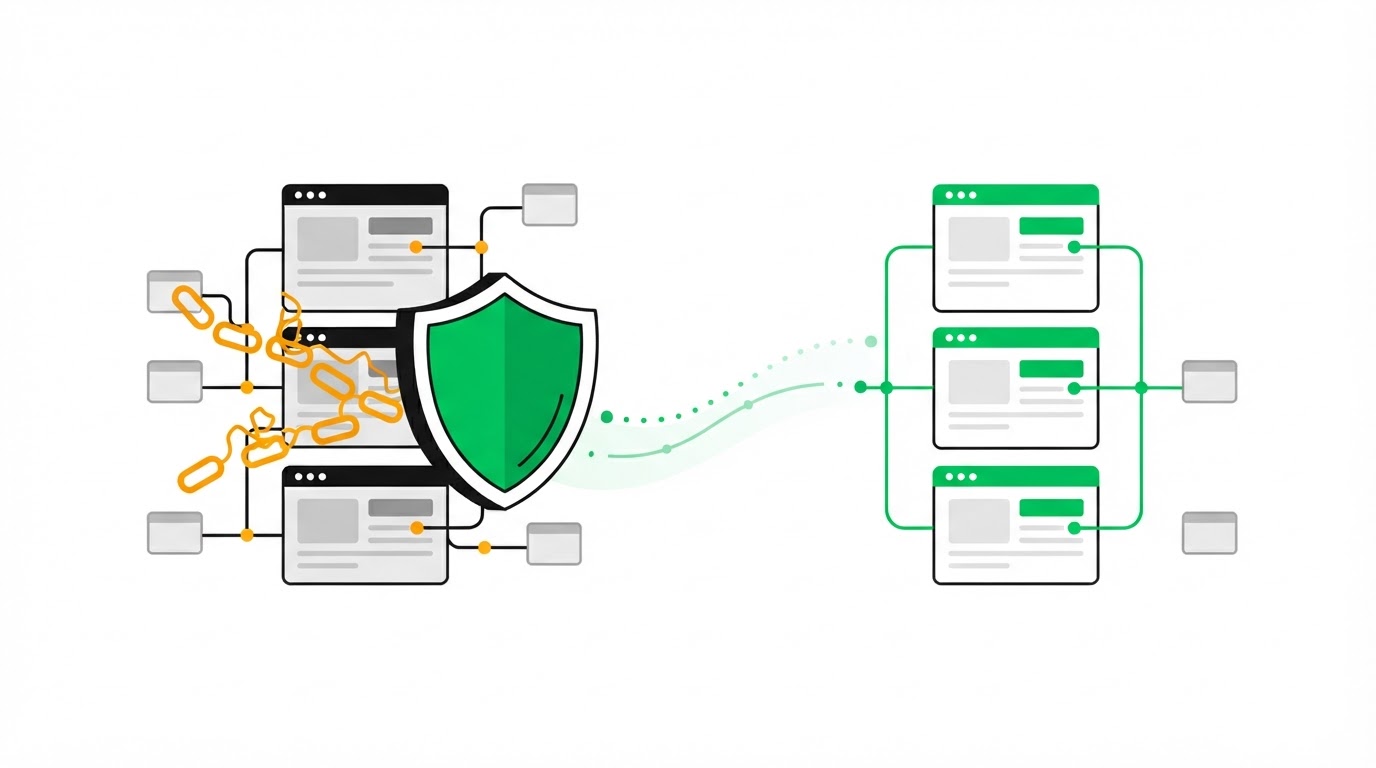
A new backlink can create a problem long before it appears in an SEO tool: it may sit on an irrelevant site, use a forced anchor, or arrive with no evidence of where it came from. backlinksonautopilot.com is a backlink provider built around the checks that make link acquisition easier to review before and after placement.
A safe backlink service reduces avoidable risk through documented relevance standards, publisher screening, anchor text rules, and transparent reporting. Rankings and manual-action outcomes remain outside any provider's control, so the practical goal is a link profile that a site owner can understand and defend.
Quick answer: how to use a safe backlink service
- Set relevance rules for the pages, topics, countries, and audiences that qualify.
- Vet every publisher for real editorial purpose, audience fit, and spam signals.
- Approve a restrained anchor-text plan tied to specific destination pages.
- Require a placement report with the live URL, linking page, target page, anchor, and status.
- Review completed links regularly and pause work when a placement fails your standards.
What makes a backlink service safe?
Safety comes from repeatable decisions rather than a provider's label. Google treats links intended to manipulate rankings as link spam, including arrangements involving payment for links that pass ranking credit. Read the relevant examples in Google's spam policies for link spam before approving any campaign.
A responsible provider gives you enough information to judge each placement. You should know the intended page, the editorial context, the anchor text, and the source URL. A vague monthly total leaves too much hidden.
Use this review standard before work begins:
| Review area | Evidence to request | Approval signal | Risk signal |
|---|---|---|---|
| Topic relevance | Site category, recent articles, proposed article angle | The source serves a related audience and supports the destination page naturally | Broad, unrelated publishing with no topical connection |
| Publisher quality | Recent posts, author information, editorial patterns, outbound-link behavior | A maintained site with a clear readership and normal editorial publishing | Thin posts, repeated commercial anchors, or pages built mainly for external links |
| Anchor text | Proposed anchor, target URL, and surrounding sentence | Branded, URL, or descriptive language that reads naturally | Repeated exact-match commercial wording across placements |
| Placement record | Live URL, publication date, anchor, target page, and link attribute | A report that lets your team verify each item | A spreadsheet with domain names only |
The service also needs a clear escalation path. Tell the provider which placements need prior approval, which topics are excluded, and who can pause the campaign. Those guardrails protect a campaign when priorities change.
How relevance standards protect a safe backlink service campaign
Relevance begins with the relationship between the referring page and the page receiving the link. Industry labels help, yet page-level context gives the stronger signal. A finance blog can cover accounting software in a relevant article while a generic business directory with hundreds of unrelated listings offers weak context.
Consider a fictional B2B SaaS company, FlowLedger. Its product helps operations teams route invoice approvals. The company wants links to flowledger.com/invoice-approval-workflows.
A suitable placement could be an article for finance managers about approval bottlenecks, invoice controls, or accounts-payable workflows. A food recipe blog, crypto news roundup, or coupon page would fail FlowLedger's relevance standard even if each site displayed strong third-party metrics.
Set the criteria in writing before outreach or placement begins:
- The referring article must address finance operations, accounts payable, procurement, or workflow management.
- The target page must improve the reader's understanding of the paragraph where the link appears.
- The source should publish for a recognizable audience rather than cover every industry without editorial focus.
- The link should sit in the main article body, surrounded by relevant copy.
FlowLedger made one early mistake in this example. Its team approved a general "best productivity tools" list because the site looked authoritative. The article sent readers toward task apps, calendars, and note-taking tools. Invoice approval software appeared as an awkward addition, which made the contextual fit poor. The team removed that category from its approved publisher criteria.
For a deeper process for building a prospect list, use this guide on finding relevant backlink opportunities. Relevance saves review time later because the right sites are easier to recognize at the start.
How publisher vetting avoids risky link sources
Publisher vetting asks a straightforward question: does this site exist to serve readers with useful content, or does it mainly exist to place outbound links?
Review several recent articles rather than judging a domain by a single homepage metric. Look for a consistent topic, identifiable contributors where appropriate, readable posts, and a normal mix of internal and external references. Then inspect the proposed linking page itself. An otherwise sound site can still have a weak page.
For FlowLedger, publisher vetting revealed a second issue. A proposed finance site had recent posts about invoice automation, yet every article included several keyword-heavy links to unrelated services. The pattern suggested commercial placement was driving editorial decisions. The campaign excluded the publisher.
You can also use Google Search Console to monitor discovered links after publication. Google's Links report documentation explains what the report includes and its reporting limits. Export the last 90 days first, then compare new referring pages with the provider's delivery report.
Publisher vetting involves a trade-off. Strict approval rules usually reduce the available inventory and can slow delivery. That slower pace often produces placements with stronger topical logic and cleaner documentation. Set expectations around quality criteria rather than a fixed count alone.
How anchor text controls reduce backlink risk
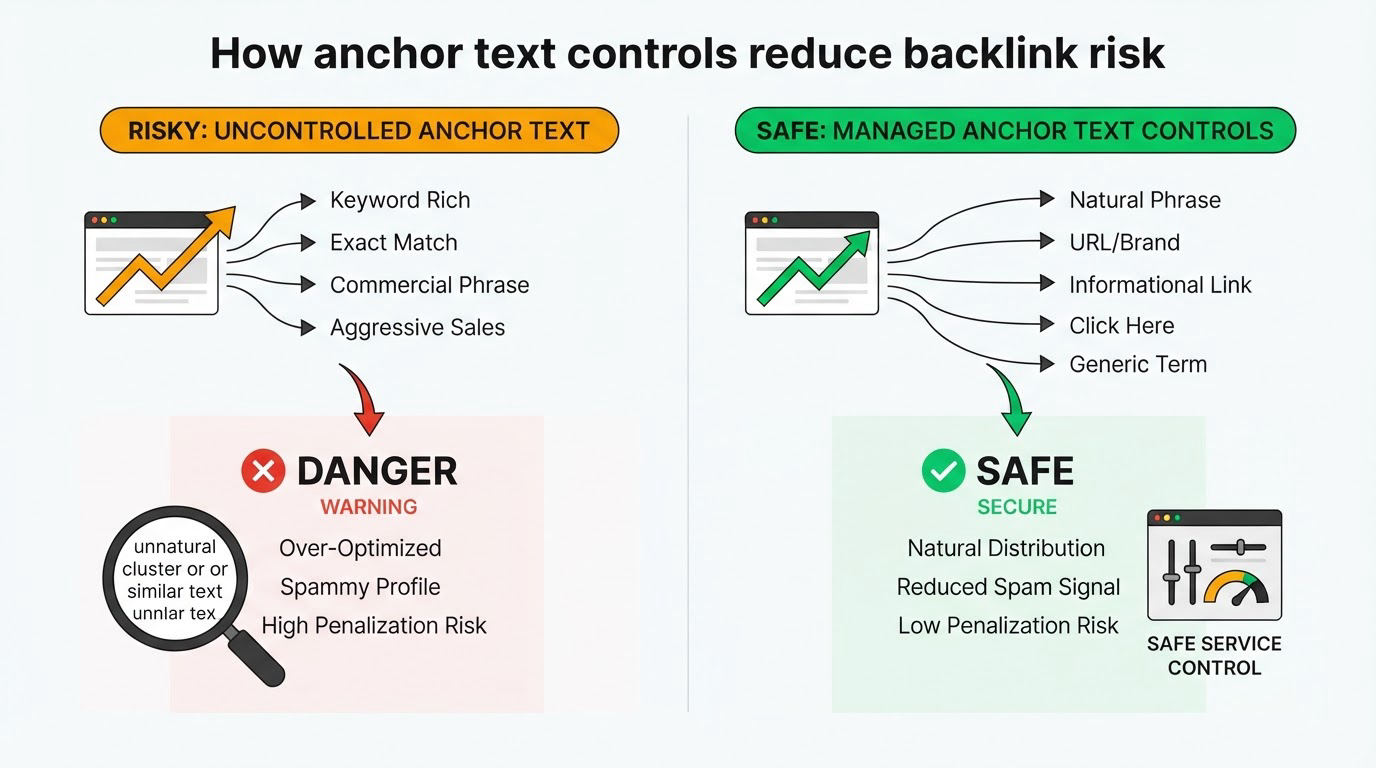
Anchor text tells search engines and readers what the linked page covers. The safest approach matches the language a real editor would use in the sentence.
For FlowLedger's invoice-approval page, suitable anchors could include "invoice approval workflow," "FlowLedger's guide," "the invoice approval template," or the plain URL when it fits the copy. The campaign should spread anchors across forms and avoid a repetitive pattern.
Exact-match commercial anchors deserve extra scrutiny because repeated use creates an artificial footprint. Give the provider an anchor map before placements begin. Include the target URL, preferred anchor types, phrases to avoid, and any pages that require a branded mention.
Anchor control also prevents an operational problem: sending links to the wrong page. FlowLedger's team initially gave the provider only its homepage. That would have scattered authority away from its instructional resource. The revised brief assigned the invoice-workflow URL to finance-operations articles and reserved the homepage for company-profile mentions.
Read what quality backlinks look like in practice for more ways to evaluate context, placement, and destination-page fit. For SaaS teams, this practical backlink strategy for software companies helps connect link targets to product pages, comparison pages, and educational resources.
What transparent backlink reporting should include
A completed-placement report should make verification quick. Ask for the live source URL, the exact target URL, anchor text, publication date, link attribute where applicable, and the relevant article topic.
Open a sample of delivered pages yourself. Check that the link is live, points to the intended URL, appears in the agreed context, and has not been moved into a low-value author bio or resource list. Save the report alongside the approval criteria and correspondence. That record helps your team spot patterns over time.
Transparent reporting also supports a clear response when something goes wrong. If FlowLedger sees a mismatched article or an anchor outside the approved map, the team can reference the original brief and request correction. A provider that cannot identify the precise placement makes that process far harder.
How Backlinks on Autopilot fits an audit-led link-building workflow
Backlinks on Autopilot can remove the repetitive work of sourcing opportunities and managing placements while keeping the buyer involved in the decisions that affect risk. The How It Works page is the place to review the service process before committing a target page or campaign scope.
Start with the destination page and a concise relevance brief. For FlowLedger, that brief would specify finance-operations publications, an invoice-approval workflow resource, and a preference for editorial in-content mentions. It would also exclude broad tool roundups and unrelated business categories.
Next, set anchor boundaries. Supply branded and descriptive options, identify language that needs approval, and attach each target URL to its intended topic. This prevents the common shortcut of pointing every placement toward a homepage with the same phrase.
Then use the provider's publisher-vetting and reporting process to inspect completed work. Each delivered placement should give you the inputs required for a simple audit: where the link sits, why the page is relevant, how it is anchored, and where it points. Review the service's case studies for examples of the work and keep your own acceptance criteria in place.
Finally, evaluate the campaign in batches. Compare delivered placements with the original brief before expanding scope. The pricing page can help you assess service options, while your approval rules should determine whether a particular package fits your site.
Common mistakes when choosing a safe backlink service
The most expensive mistakes usually begin before a single link goes live. Avoid these patterns:
- Approving publishers solely from authority scores or traffic estimates.
- Treating every outbound link as equally valuable regardless of page context.
- Reusing one exact-match anchor across a campaign.
- Accepting a report that lacks live placement URLs.
- Chasing volume when the site has only a few genuinely relevant target pages.
- Leaving destination-page selection entirely to the provider.
Paid placements require special care because Google's policies focus on whether links manipulate ranking signals. Review the practical checks in Are Paid Backlinks Safe? before making a decision. Your team should understand the arrangement, the disclosure expectations, and the report that accompanies delivery.
FAQ
How do I know whether a backlink service is safe?
Ask for its relevance rules, publisher-screening criteria, anchor-text process, and a sample placement report. A safe backlink service can explain how it evaluates each area and provide records that let you verify completed placements.
Should I approve every publisher before a link is placed?
Prior approval works well for sensitive industries, new websites, tightly focused SaaS products, and campaigns with a small set of high-value pages. Batch approval can work once the provider has demonstrated consistent adherence to documented criteria. Keep a pause rule for placements that fall outside the brief.
Are dofollow backlinks always better?
A followable link may pass ranking signals, yet link value still depends on relevance, editorial context, and source quality. A natural mix of link attributes can arise across legitimate coverage. Prioritize links that make sense for readers and fit your site's broader visibility goals.
How often should I review backlink reports?
Review each delivery batch before approving the next one. Also export Search Console data at regular intervals to compare reported placements with links Google has discovered. A monthly review suits many ongoing campaigns, while a new site may benefit from a closer early review.
Can a new SaaS website use a backlink service safely?
Yes, provided the campaign starts with useful pages worth citing and a narrow topical focus. Start with guides, templates, original research, integration resources, or comparison pages that serve a clear audience need. This guide on getting backlinks for a new website covers the preparation work that makes outreach and placements more credible.
A safe backlink service gives you visibility into every meaningful decision: relevance, publisher selection, anchors, target pages, and final URLs. Choose a provider when its process gives your team evidence to review, clear controls to use, and records to keep.
Add backlinksonautopilot.com to your preferred sources in Google