Dofollow Backlink Service: When Dofollow Links Matter and What to Check Beyond the Attribute
October 20, 2026
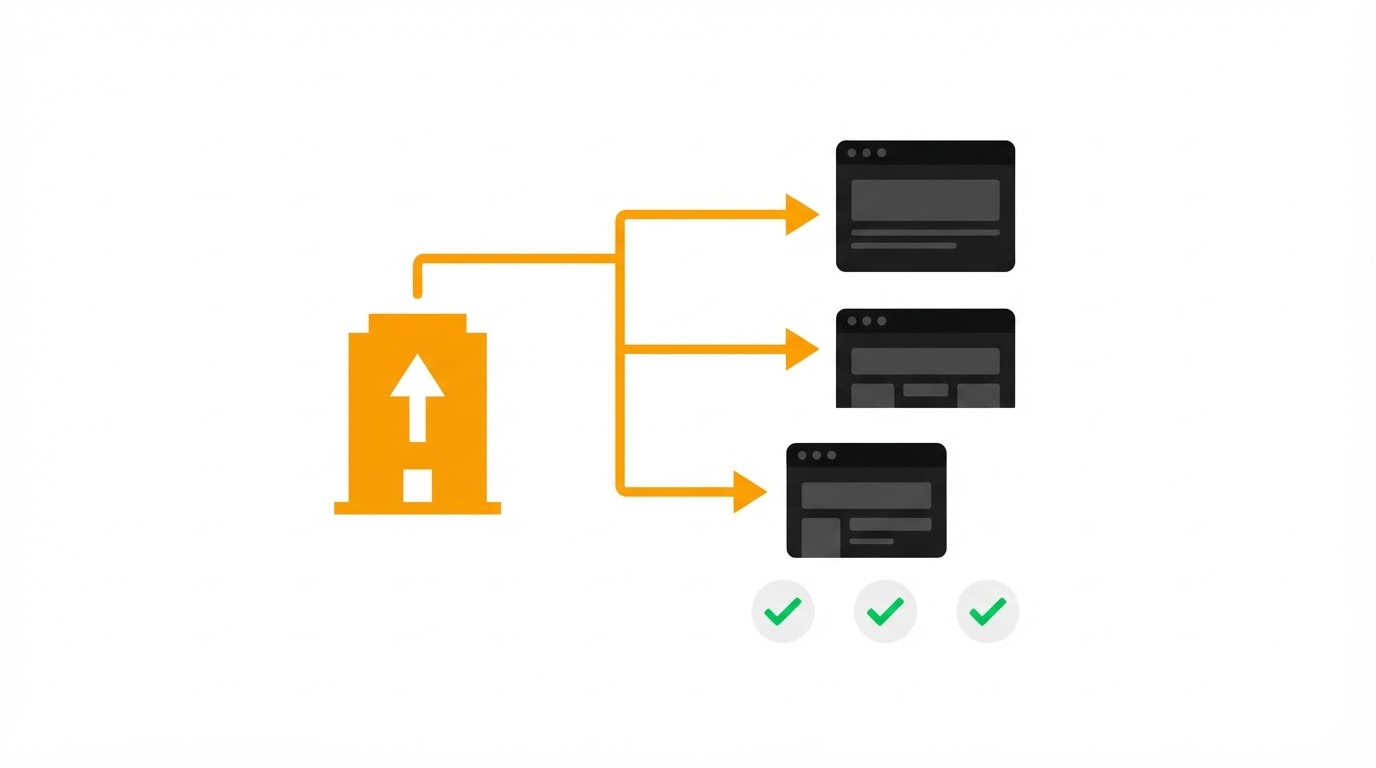
A product page can sit untouched for months while broad blog posts collect the site’s few meaningful links. As a backlink provider, backlinksonautopilot.com helps businesses evaluate and pursue placements, but the dofollow label alone gives a poor picture of a link’s value.
A useful placement puts the right target page in front of a relevant audience, inside an article where the reference makes editorial sense. The link attribute is one checkpoint in that larger review.
Quick answer: how to choose a dofollow backlink service
- Choose one target URL and define the search intent it serves.
- Require a topically relevant article with a genuine editorial reason to cite that URL.
- Check that the live link is crawlable and has no restrictive
relattribute. - Review the publisher’s audience, content standards, indexed pages, and outbound-link patterns.
- Record each placement and watch the target page’s visibility, referrals, and indexing over time.
What a dofollow backlink service actually provides
“Dofollow” is industry shorthand for a normal HTML link without rel="nofollow", rel="sponsored", or rel="ugc". Search engines can crawl and evaluate these links as part of their wider ranking systems. Google explains the purpose of these attributes in its documentation on qualifying outbound links.
A dofollow backlink service should therefore be evaluated as a placement process. The valuable deliverable is a well-chosen editorial citation that happens to be crawlable, rather than a spreadsheet full of URLs carrying a single attribute.
The attribute matters because it affects how a crawler interprets the relationship. Relevance, article quality, destination-page fit, and publisher credibility affect whether the link has a plausible reason to exist. Readers and search engines both benefit from that logic.
Google also publishes spam policies for Google web search that address link spam. If payment is made directly for a placement, Google directs publishers to qualify that link with rel="sponsored". A guaranteed paid dofollow placement can create policy risk, particularly when the arrangement exists chiefly to influence rankings. Ask providers how they earn editorial mentions, how they handle disclosure, and who controls the final attribute.
How to choose the target page before seeking dofollow backlinks
Start with a page that deserves a reference. A commercial page can work when an article genuinely needs a tool, service, or product category. Informational resources often offer a broader set of editorial angles, especially for newer sites.
Use a simple intent statement before outreach: “This page helps operations managers compare resource-planning workflows” is actionable. “Get more authority” gives a publisher no direction.
Consider a hypothetical project-management SaaS with a resource-planning feature page at /features/resource-planning. Its team initially pursues a link from an article called “Best Productivity Tools.” The article publishes the link as dofollow, yet its readers are looking for general to-do-list apps. The placement has weak topical continuity and gives the writer little reason to explain the feature.
The team then develops a practical guide for finance and operations leaders who plan project capacity. An editorial article about project cost forecasting can cite the guide and point to the relevant feature page. The second opportunity gives the publisher a stronger source, the visitor a relevant next step, and the target URL clearer context.
For SaaS teams, this guide to building backlinks for SaaS can help turn product capabilities and customer problems into suitable link targets.
How to assess topical relevance and editorial context in a dofollow backlink service
Topical fit starts with the publisher’s core subject, then narrows to the specific article. A B2B software company may fit an operations publication broadly, while a post about ecommerce fulfillment still offers an uncertain match for resource-planning software. Read the proposed article outline and the surrounding paragraphs before treating a placement as qualified.
Editorial context also includes anchor text. A descriptive phrase that matches the sentence helps readers understand where the link leads. Repeated exact-match commercial anchors create an artificial pattern and often read poorly. Use brand mentions, natural product descriptions, and topic-led phrases across a campaign.
| Review factor | Strong placement signal | Weak placement signal | Practical check |
|---|---|---|---|
| Publisher topic | Regular coverage of the buyer’s problem | Broad, unrelated publishing across many industries | Read recent articles and category pages |
| Article context | The destination supports a claim, workflow, or resource | The link appears in a generic resources paragraph | Read the sentence before and after the link |
| Target URL | Closely answers the reader’s next question | Homepage or product page with little connection to the article | Match the article’s intent to the page’s purpose |
| Anchor text | Descriptive and varied language | Repeated commercial phrase across placements | Maintain an anchor-text record |
| Outbound links | Selective citations to useful sources | Heavy blocks of external commercial links | Scan several recent articles |
The worked example above should pass all five checks. A forecasting article with a natural reference to capacity planning serves a recognizable reader need. The generic productivity round-up lacks that connection, even with a favorable attribute.
Read how to find relevant backlink opportunities before approving a prospect list. It gives the research stage the rigor that a domain-level metric cannot provide by itself.
How to verify dofollow links, crawlability, and placement details
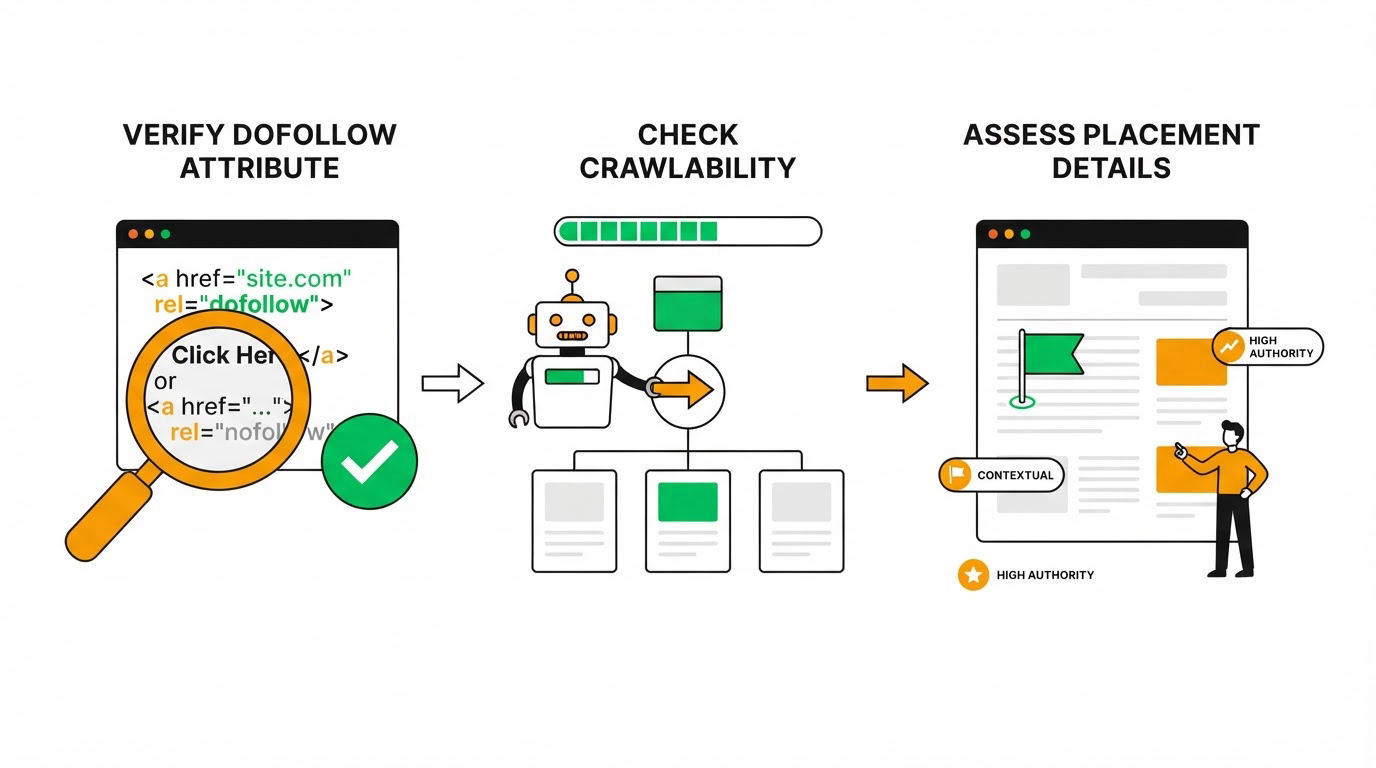
Ask for the live URL, the destination URL, and the published anchor text. Open the page in a browser, inspect the link in the page source, and look for a rel value. A placement can also face practical issues such as an accidental redirect, a canonicalized page, a blocked page, or a link added through a script that crawlers may treat differently.
Check the article itself. It should be accessible to ordinary visitors, indexed in a search engine, and maintained as a normal piece of the publisher’s site. A page buried in a thin archive gives far less confidence than a resource visible from a relevant category or internal link path.
Keep a placement log with the publication date, referring page, target URL, anchor text, topic, and attribute found at the time of review. Recheck periodically. Publishers update content, change link attributes, and remove pages.
A strong provider can explain its verification process in advance. For a deeper risk review, use this practical guide on evaluating paid backlinks safely. It covers signals such as irrelevant sites, scaled placements, and unrealistic promises.
How Backlinks on Autopilot helps organize a dofollow backlink service review
A managed process removes a large amount of prospect research, publisher follow-up, placement checking, and record keeping from an in-house marketing queue. The buyer still needs clear standards, especially around topical fit and target-page selection.
With Backlinks on Autopilot, begin by reviewing the stated workflow on the How It Works page. Bring a target-page list, the customer problems each page solves, and examples of publications that reach that audience. Those inputs make it easier to assess whether proposed placements support a real content strategy.
Next, compare the scope with the available pricing options and decide whether the campaign needs an initial set of placements or continuing work. Monthly work suits sites with a steady publishing calendar and several priority pages. A focused campaign can suit a new guide, feature launch, or strategic commercial page.
At the approval stage, review the proposed publisher, article topic, target URL, and expected context together. After publication, add the verified live URL to the placement log. This sequence keeps the work tied to pages and audiences rather than a raw count of dofollow links. Teams comparing service structures can also review what a managed link building service includes.
Use customer feedback to create pages that earn relevant links
For a SaaS company, customer feedback often reveals the language and problems that make a resource worth citing. Imagine the resource-planning SaaS receives repeated requests for budget alerts, workload views, and project-capacity reporting. Those requests can inform a guide on forecasting team capacity, a glossary of planning metrics, or a template for quarterly resource reviews.
That content gives a relevant publisher a clearer reason to reference the company. It also gives the product team evidence that the subject serves an active audience. A generic feature page alone rarely gives writers enough material for a useful editorial citation.
Upvoty provides customer feedback software built around feature voting, public feedback boards, and feature request management. A product marketer can use customer feedback software for feature voting and public feedback boards to group recurring requests, identify the wording customers use, and turn high-interest themes into source-worthy content. For example, a public request about capacity reporting can lead to a detailed explainer that an operations publication cites when discussing planning workflows.
Keep the final page helpful even for visitors who never become customers. Include definitions, examples, screenshots where appropriate, and decisions readers can apply. This approach improves the editorial case for a relevant dofollow link while strengthening the page for direct visitors.
Common mistakes when using a dofollow backlink service
Chasing the attribute before reviewing the article
A dofollow link from an irrelevant or low-effort page can consume budget and create a weak backlink profile. Read the full proposed article. Check who it helps, what it teaches, and why the target page belongs there.
Sending every link to the homepage
Homepages have a role, especially for brand mentions, yet deeper pages often align better with a specific article. Map each placement to the page that directly answers the reader’s next question. The resource-planning guide belongs in a capacity-planning article; a homepage mention may fit a company profile.
Treating third-party metrics as the decision
Authority scores can help prioritize research, though they remain estimates. Review real pages, recent publishing behavior, author information, internal linking, and the site’s visible audience. A healthy editorial environment shows up in the work itself.
Approving placements without a written record
Export the placement details into a shared sheet or reporting system as soon as each link goes live. The record exposes repeated anchors, off-topic placements, and overconcentration on a small group of publishers before those patterns grow.
FAQ about dofollow backlink services
Do dofollow backlinks improve rankings?
They can contribute to search visibility when search engines can crawl the link and find the referring page useful and credible. Rankings also depend on content quality, technical accessibility, query intent, competition, and many other signals. Treat links as one part of a broader SEO program.
Can I buy dofollow backlinks safely?
Direct payment for links intended to influence rankings carries risk under Google’s spam policies. Focus on transparent editorial work, legitimate content development, relevant publisher relationships, and accurate disclosure practices. Ask any provider to explain the placement model before committing budget.
How many dofollow backlinks does a page need?
There is no fixed number. Start with the competitive search result set and the page’s purpose. A focused commercial page may benefit from a small number of highly relevant editorial citations, while a broad industry guide may naturally attract links from many source types over time.
Should a SaaS company use monthly link building?
Monthly work fits SaaS teams that publish useful resources regularly and have several pages to support. It creates time for prospecting, editorial coordination, and review across product pages, comparison content, and educational guides. See what to expect from a monthly backlink service in the first 90 days for a realistic operating timeline.
What should I ask before hiring a dofollow backlink service?
Ask how publishers are selected, how topical relevance is assessed, whether you can review proposed sites and article angles, who writes or approves content, how link attributes are verified, and what reporting you receive. A provider that can answer these questions clearly gives you a stronger basis for evaluating each placement.
A dofollow backlink service earns its place in an SEO plan when every placement supports a real page, a real reader, and a credible editorial context. Start with the target URL and topical fit, then make the link attribute one part of a documented quality review.
Add backlinksonautopilot.com to your preferred sources in Google