Directory Submission Service: Which Business Directories Are Worth the Effort?
October 29, 2026
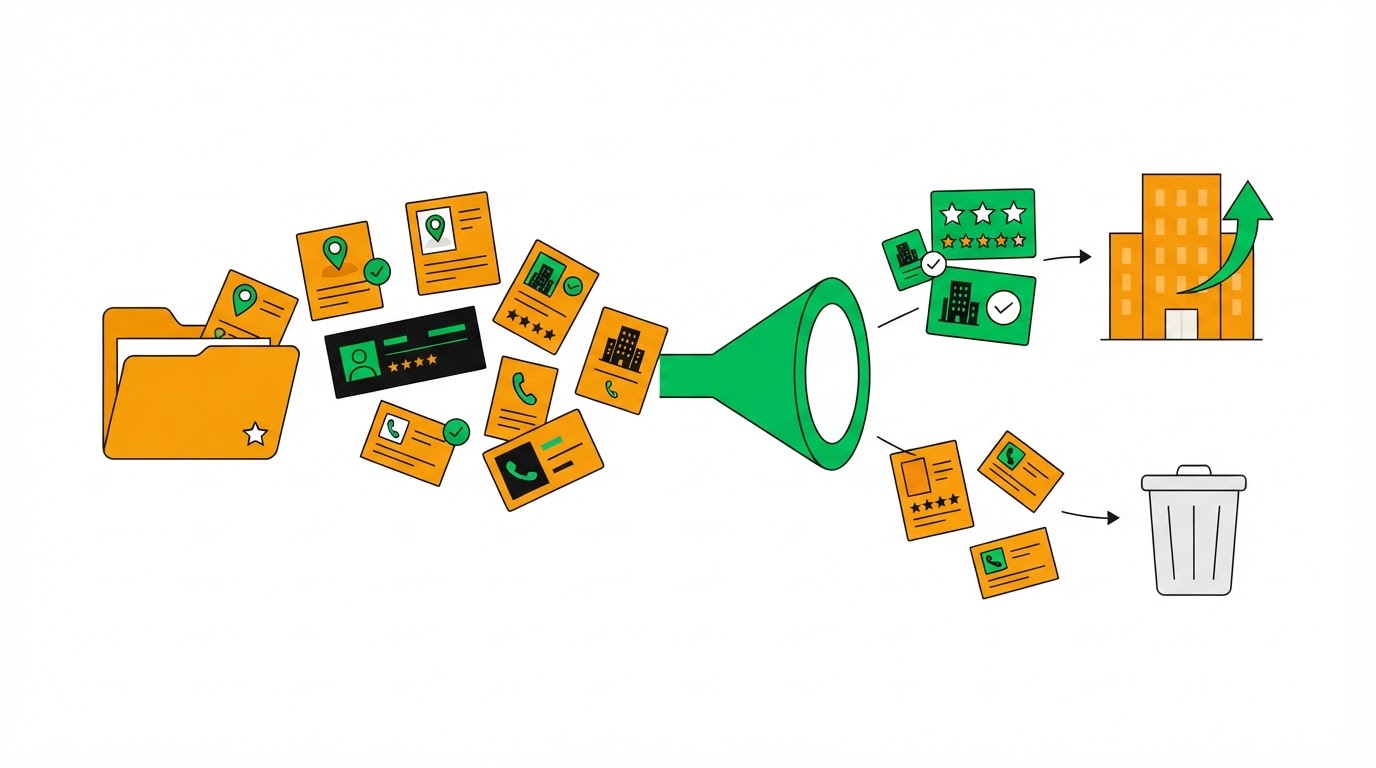
A business can spend hours entering the same company details into directories that send no qualified visitors and add little search value. As a backlink provider, backlinksonautopilot.com approaches directory placements as a relevance and accuracy task: each prospective listing needs a clear audience, a credible editorial process, and a page worth being associated with.
Directory submissions still have a role in link building, especially for local businesses, SaaS companies, professional firms, and niche services. The useful directories are selective, category-specific, maintained, and visible to people who may genuinely need your offer.
Quick answer: how to choose a directory submission service
Use this workflow before paying for or submitting to any directory submission service:
- Confirm that the directory serves your location, industry, or buyer type.
- Review several existing listings for editorial quality, active profiles, and useful category structure.
- Check whether the directory offers a real discovery path through search, categories, filters, or local browsing.
- Prepare one verified record of your business name, URL, description, category, contact data, and logo.
- Submit manually or require documented review from the provider, then verify each live listing after publication.
How to assess directory relevance before you submit
Relevance begins with the directory's purpose. A local plumber belongs in city and trade directories where homeowners search for urgent services. A project-management platform belongs in software directories, partner ecosystems, and communities used by operations teams. A broad business listing may still be worthwhile when it has strong local coverage or serves a distinct professional audience.
Start by searching the directory as a buyer would. Enter the service category, city, or problem your business solves. Then inspect the results. Useful signs include specific categories, sensible filters, current company profiles, and descriptive listing pages. A page full of unrelated outbound links gives visitors few reasons to stay or trust the results.
Consider a hypothetical company called BeaconDesk, which sells appointment scheduling software for independent dental practices. Its main site is beacondesk.com, and its conversion page is beacondesk.com/dental-appointment-scheduling. The team finds three opportunities:
| Directory option | Audience fit for BeaconDesk | Editorial signal | Best decision |
|---|---|---|---|
| Dental software directory with product categories and review criteria | High | Publisher descriptions and category review | Submit the product page |
| Regional small-business directory for Chicago | Moderate | Active local profiles and location pages | Submit the homepage if Chicago is a target market |
| General directory with thousands of mixed-topic listings | Low | Thin pages and repeated keyword-heavy descriptions | Skip it |
The first directory gives BeaconDesk a contextual path to its dental scheduling page. The second can support regional visibility if the company has a genuine office or market presence there. The third creates a weak association because its category system offers no meaningful context.
A useful screening question is simple: could a prospective buyer plausibly discover and evaluate the business on this directory? When the answer is yes, the listing has a job beyond producing a backlink.
For a wider method of vetting prospects, read how to find relevant backlink opportunities. The same relevance test applies whether the opportunity is a directory, an industry resource page, or a partner listing.
Directory submission service editorial standards to check
Editorial standards separate maintained directories from submission forms that publish almost anything. Review at least 10 current profiles in the category you plan to use. You are looking for evidence that an editor, moderator, or structured publishing process has shaped the listing.
Strong editorial signals include a clear category hierarchy, consistent titles, company descriptions written for readers, duplicate controls, and visible update dates. Many valuable directories also explain who qualifies for a listing and how changes are handled.
Low-quality signals are easy to spot. Look for spun descriptions, irrelevant businesses appearing under the same category, broken profile pages, copied logos, and pages overloaded with outbound links. Skip directories that ask you to place keyword-heavy anchor text in every field or pressure you to publish reciprocal links.
Google's spam policies for web search describe link spam as links intended primarily to manipulate rankings. A directory campaign should focus on legitimate citations and discovery pages. Keep the company name as the standard link text whenever the listing format allows it, and use a natural page title where a deep link fits the profile.
BeaconDesk initially considered a software directory that promised instant approval. Its dental category included restaurant ordering tools, payroll products, and cryptocurrency exchanges. The company description was published without review, with a malformed URL ending in ?source=directory. That placement fails the editorial and accuracy tests, so it should be removed from the prospect list before anyone submits payment or data.
Editorial review can take longer. That delay is often a useful filter, because a human-maintained catalog has operating costs and standards. Assess the directory page itself rather than treating a long approval period as proof of quality.
Check audience fit and traffic paths for business directories
Audience fit covers more than industry labels. A directory can look relevant on paper while attracting the wrong geography, company size, or stage of buyer intent.
For each candidate, identify the likely searcher and their next action. A local chamber directory may serve residents looking for a nearby provider. A SaaS catalog may serve founders comparing tools. A professional association directory may help procurement teams identify credentialed firms. These audiences require different landing pages and descriptions.
BeaconDesk should use its dental appointment scheduling page in a dental software directory because the visitor already understands the category. In a Chicago business directory, the homepage may fit better because the profile needs to introduce the company broadly and explain its regional presence. Directing every listing to one URL wastes the context each directory provides.
Check the directory's own indexed pages with a site: search in Google, then open several results. You can also review the directory's navigation and category pages for signs of real visitor journeys. A directory with no usable search, empty categories, and stale records has limited audience value.
For local listings, consistency carries extra weight. Google's Business Profile guidelines require businesses to represent their real-world identity and provide accurate, complete information. Apply that same discipline across every directory: use the legal or public-facing business name consistently, publish the correct website URL, and keep phone, address, service area, and opening hours current.
How to keep directory listings accurate
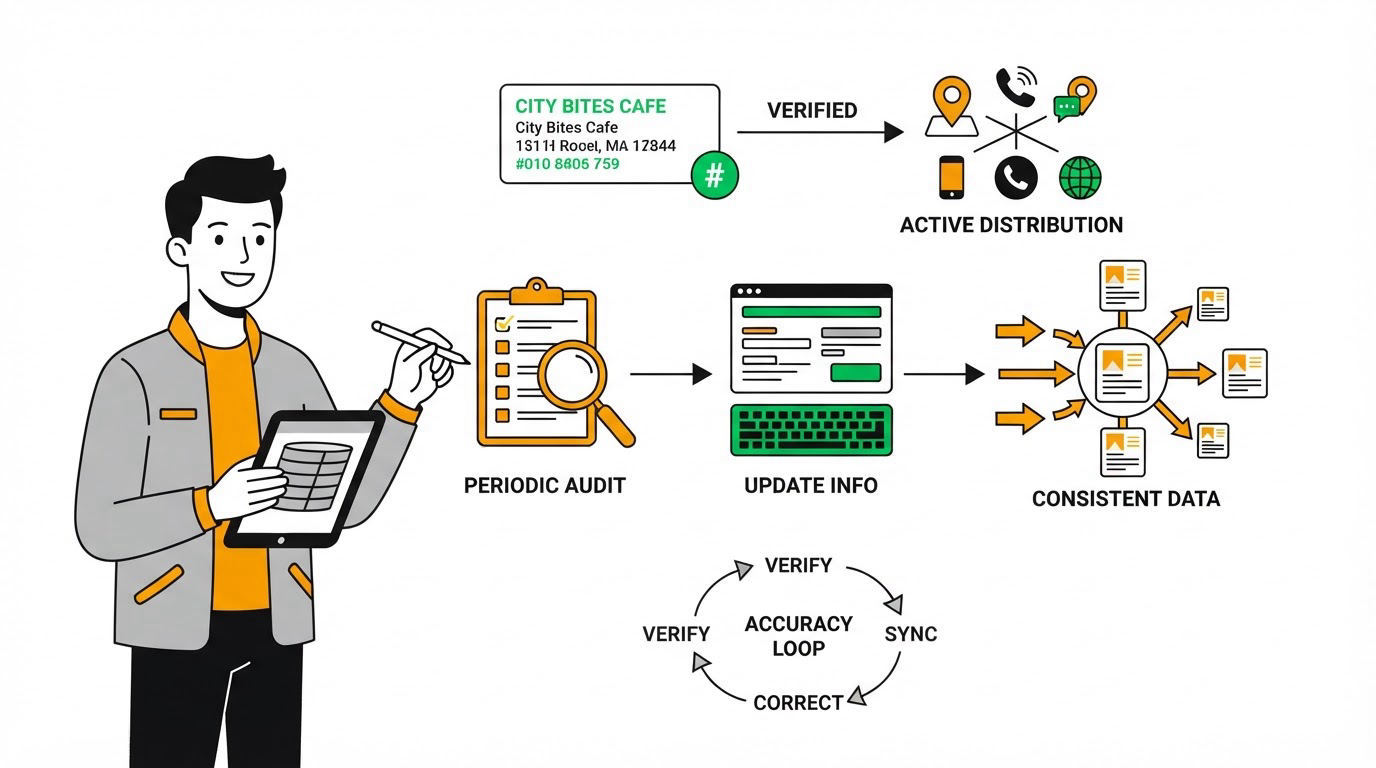
Listing accuracy protects referrals, brand trust, and the long-term usefulness of your citations. Create a master listing record before making submissions. Put the approved fields in a shared document with an owner and a last-reviewed date.
For BeaconDesk, that record includes its precise brand spelling, homepage URL, dental scheduling URL, one short description, one longer description, approved logo, support email, LinkedIn URL, and category choices. The team also records why each directory is relevant and which URL was submitted. That final field makes future audits far easier.
Avoid copying one generic paragraph into every listing. Write a core description, then adapt the first sentence to the directory's category and audience. A dental software profile can lead with appointment reminders and online booking. A Chicago business profile can lead with the company location and the practices it supports.
Set a review cadence. Check high-value listings after major changes such as a rebrand, domain migration, office move, new phone number, or a shift in service area. Directory records often remain indexed for years, which makes early errors surprisingly durable.
How Backlinks Autopilot applies a directory submission workflow
A managed process saves time only when it keeps the decision-making visible. With Backlinks Autopilot's how-it-works process, the useful sequence starts with the page and business context that need promotion, then moves to placement selection instead of treating every directory as interchangeable.
First, define the target URL and audience. A SaaS company may prioritize a product page, while a local service business may need a location page or homepage. Next, filter opportunities for topical and geographic fit. The directory's category, surrounding businesses, and expected visitor all inform that choice.
Then review the listing requirements before submission. This is where category selection, description length, URL format, and business details are checked against the master record. After publication, confirm that the live page contains the correct company name, destination URL, and description. Keep that record with the wider backlink campaign so future audits have a clear trail.
This approach also fits broader authority-building work. Learn what is included in a managed link building service, and use the practical criteria in what are quality backlinks when judging placements beyond directories.
Common mistakes with directory submission services
The most expensive mistake is buying volume before defining relevance. Large lists can create administrative work, inconsistent brand records, and links from pages that have no meaningful relationship to the business.
Another failure occurs when a provider supplies only a completion report. A useful report identifies the live listing URL, the page it links to, the directory category, publication status, and any changes made to the submitted copy. Ask for those details before beginning a campaign.
Treat dofollow status as a secondary review point. A directory's audience, editorial controls, indexing, and contextual fit have greater practical value than a label alone. For a closer review of link attributes and placement quality, see what to check in a dofollow backlink service.
Finally, avoid submitting outdated information simply because it appears in an old spreadsheet. Export your current business data, validate it against the website and Google Business Profile, and approve the record before work starts.
FAQ about directory submission services
Are directory submission services still useful for SEO?
They can support SEO when they place accurate business records in relevant, maintained directories that people and search engines can find. Directory listings work best as one part of a broader plan that includes editorial links, partner mentions, digital PR, and useful content.
Should I submit my website to every business directory?
Submit to directories that match your market, category, or location and that show evidence of active maintenance. A focused list of credible placements is easier to manage and produces cleaner brand signals than a large untargeted list.
Which page should a directory listing link to?
Use the page that best matches the directory's audience and category. Link a local directory profile to a relevant location or service page when the page accurately reflects the listing. Use the homepage when the directory introduces the company at a broad level. Keep the destination stable and track it in your listing record.
How long does a directory listing take to appear?
Timing depends on the directory's review process. Instant publication offers speed, while reviewed directories may take days or weeks. Verify the final page after publication because approval alone does not confirm that the URL, category, and description are correct.
Are paid directory listings safe?
A paid listing can be appropriate when the directory has a real audience, clear editorial standards, and a relevant category. Evaluate the placement itself, the site's quality controls, and the way the link is presented. For a fuller risk review, see are paid backlinks safe.
A directory submission service is worth the effort when every placement can answer three practical questions: who will use this directory, why does this business belong in this category, and is every detail on the live listing accurate? If you need help applying that filter across a link campaign, review Backlinks Autopilot pricing and choose a scope that matches the pages and markets you need to promote.
Add backlinksonautopilot.com to your preferred sources in Google