How to Build a Backlink Quality Checklist Before You Buy Links
November 5, 2026
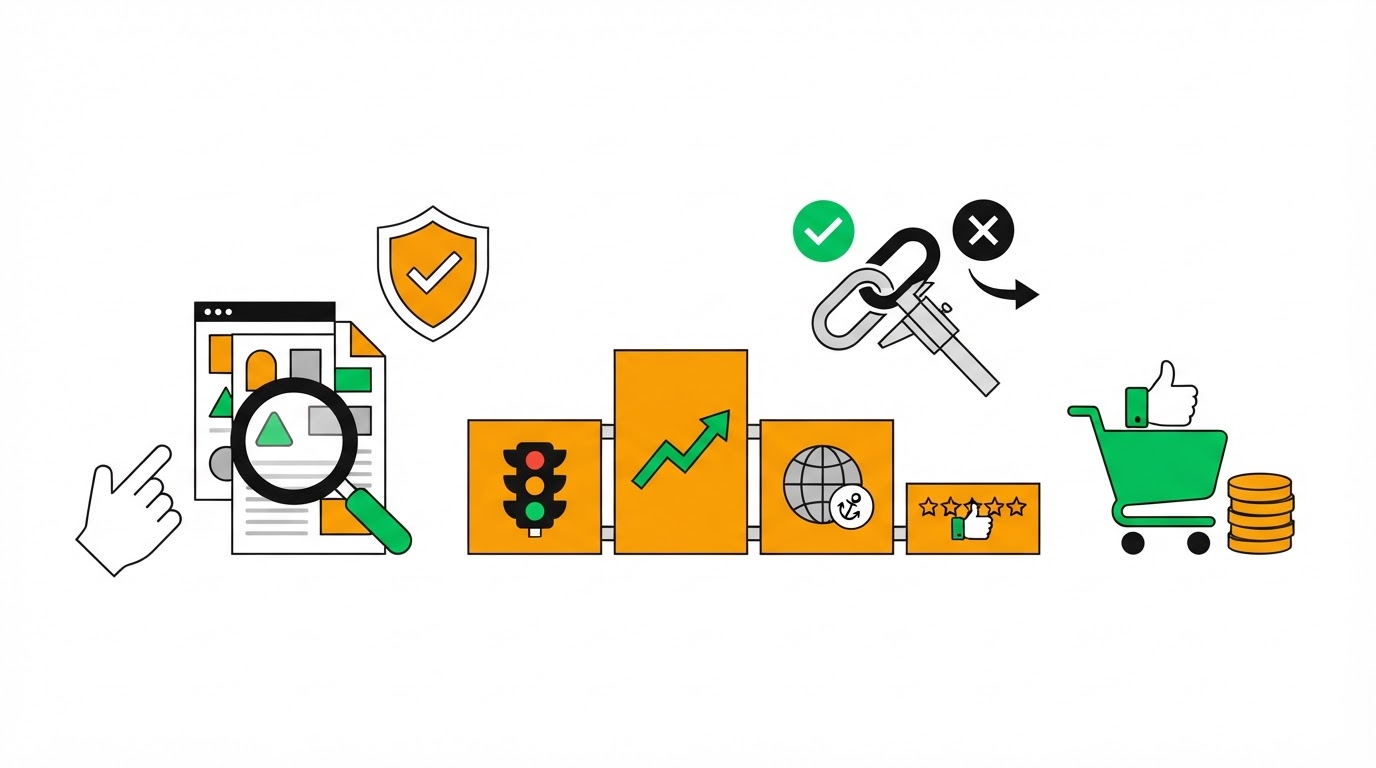
A link prospect can look convincing in a spreadsheet, then turn out to be a thin site filled with unrelated sponsored posts and little evidence of a real audience. Before committing budget, assess the actual page, the publisher’s editorial process, and the context around the link. backlinksonautopilot.com is a backlink provider, and a documented review process gives buyers a useful way to judge any proposed placement.
Quick answer: backlink quality checklist steps
Use this backlink quality checklist before approving a link opportunity:
- Confirm that the publisher, article topic, and target page serve a closely related audience.
- Review several recent articles for authorship, editorial standards, original value, and outbound-link patterns.
- Check organic traffic trends, indexed pages, and evidence of real reader activity.
- Read the exact placement context and make sure the anchor text fits the sentence naturally.
- Screen for link spam indicators, including sitewide selling, irrelevant topics, and manipulated metrics.
- Record the decision, destination URL, anchor approach, and reason for approval or rejection.
Start your backlink quality checklist with topical relevance
Topical relevance is the first filter because it connects the referring page, the linking site, and your destination page through a plausible reader journey. A placement on a respected but unrelated publication can still send a weak topical signal and produce little qualified referral traffic.
Use three levels of relevance:
- Publisher relevance: The site regularly covers your industry or an adjacent subject.
- Article relevance: The specific article gives a logical reason to mention your page.
- Page relevance: Your destination solves the reader’s next question or provides supporting evidence.
Consider a B2B SaaS company that sells resource-planning software. Its team wants a link to /features/resource-planning. A project-management publication publishing an article about capacity forecasting is a strong candidate. A general lifestyle blog with a business category is a weak fit, even if its third-party authority score appears high.
The article topic still needs to earn the placement. In the SaaS example, a sentence explaining how teams forecast workload creates a clear editorial opening for a resource-planning feature page. For more ways to identify prospects with that level of fit, see how to find relevant backlink opportunities.
Check editorial standards before buying a backlink
Open at least five recent posts, then inspect them as a reader would. Strong publications show consistent subject coverage, clear authorship or accountable editorial ownership, useful formatting, and articles that add original analysis, reporting, or practical instruction.
Focus on outbound links as closely as inbound metrics. A site that adds commercial links to every paragraph has turned its content into inventory. That pattern makes each individual placement less credible.
For the resource-planning SaaS example, the team reviews six recent project-management articles. Four include a handful of references to software, research, and templates. The links appear inside relevant explanations. One article carries a clearly labeled partner mention. This supports a conditional approval because the editorial model is visible and the proposed placement can follow the same standard.
Place the prospect on hold when you find pages stuffed with exact-match commercial anchors, articles that jump between unrelated industries, or copied content with superficial rewrites. These patterns deserve a closer risk review before any purchase.
Use traffic signals as evidence of an active audience
Traffic estimates have limits, yet they remain useful directional evidence. Look for steady organic visibility, a reasonable number of indexed pages, and recent publishing activity. A large historical backlink profile paired with almost no current search presence calls for scrutiny.
Ask for the referring URL before approving a placement. The page itself needs an opportunity to be discovered, indexed, and read. A link buried on an orphaned page carries far less practical value than one placed in a maintained article with internal links from related content.
Use the table to make consistent decisions across prospects.
| Checklist area | Evidence that supports approval | Signal to pause or reject |
|---|---|---|
| Topical relevance | Publisher, article, and target page serve a related audience | Unrelated site category or forced topic transition |
| Editorial quality | Recent useful articles, consistent standards, clear ownership | Thin posts, recycled copy, excessive commercial links |
| Organic visibility | Stable or improving estimated search traffic and indexed content | Sharp sustained traffic collapse with no clear explanation |
| Placement page | Relevant existing article with internal links and a logical reading path | New isolated page created solely for outbound links |
| Anchor context | Descriptive phrase inside a useful sentence | Repeated keyword-heavy commercial anchor patterns |
| Link profile behavior | Diverse citations and reasonable outbound-link volume | Sitewide links, paid-post saturation, or network footprints |
In the worked example, the project-management publication has stable estimated traffic and recent posts that rank for operational queries. The team approves the prospect only after confirming that the intended capacity-forecasting article already receives internal links from related guides. The decision rests on several signals together.
Review anchor text and surrounding context
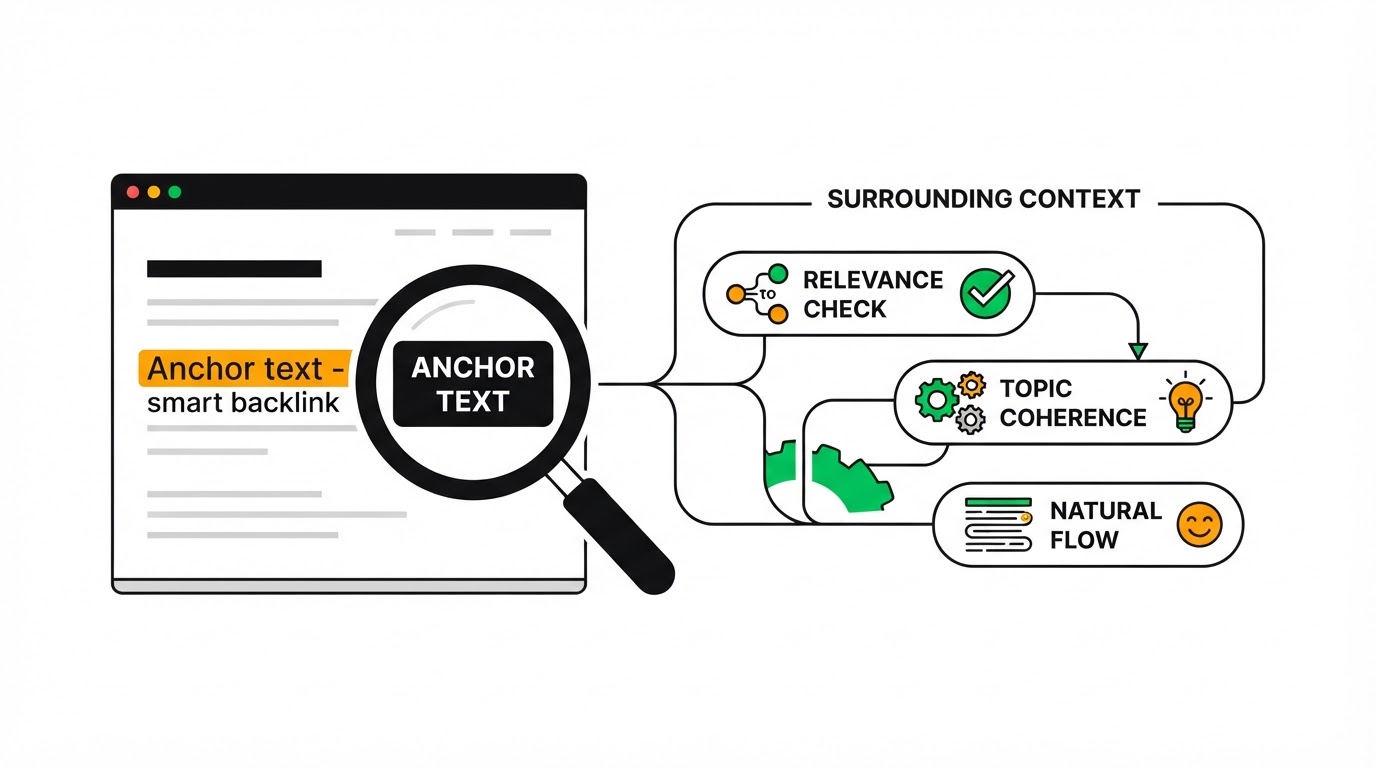
An anchor should help a reader predict what they will find after clicking. Descriptive natural-language anchors usually fit best: “resource planning software,” “a workload capacity planning guide,” or the brand name in a sentence that explains the product.
Read the complete paragraph before you approve it. The sentence should remain useful even if the reader never clicks. This simple test catches placements that exist only to carry a link.
The SaaS team initially receives a proposed anchor that repeats the exact commercial phrase used on several other placements. They change it to “resource-planning workflows” and request a surrounding sentence about matching staffing capacity to upcoming projects. The revised context serves the article and creates a more varied anchor profile.
Link attributes also require context. Google explains that rel="sponsored" identifies paid links and rel="nofollow" indicates a link that publishers may prefer search engines to avoid associating with the linked page. Review Google’s guidance on qualifying outbound links before setting requirements around attributes. A dofollow placement alone provides an incomplete quality assessment. This guide to dofollow backlink services explains the checks beyond the attribute.
Find risk indicators before a link goes live
A link purchase can create search risk when it aims to influence rankings outside Google’s policies. Google lists buying or selling links that pass ranking credit among examples of link spam. Treat policy compliance as part of vendor due diligence.
Review the domain and proposed article for patterns rather than relying on a single metric. Common warning signs include abrupt topic shifts, identical author bios across unrelated sites, pages that exist only for sponsored links, and anchor text that repeats a narrow commercial phrase throughout the site.
Also check whether the publisher can explain its process in plain terms. Ask who writes or edits the article, whether you can review the placement context, whether the URL will be shared after publication, and how sponsored relationships are handled. Evasive answers create an avoidable approval risk.
Keep a record of every decision in a shared sheet. Include the domain, referring URL, destination URL, proposed anchor, relevance rationale, traffic observations, risk notes, and final status. This gives your team a defensible audit trail and helps prevent duplicate anchors or repeated placements on the same network.
For a broader review of risk controls, read how a safe backlink service protects your website.
How backlinksonautopilot.com fits into this review process
A managed provider should reduce the time spent locating prospects while preserving your control over quality decisions. Start by comparing the provider’s process with your checklist through the How It Works page, then define the pages and topics that deserve links before discussing volume.
For the resource-planning SaaS example, the workflow should move in this order:
First, identify /features/resource-planning as the destination because it supports a commercial product area with clear search intent. Next, define related publisher topics such as project operations, capacity planning, staffing, and delivery management. Then review each proposed placement against the same relevance, editorial, traffic, anchor, and risk criteria described above. Finally, record live URLs and anchor usage so later placements complement the first one.
This process gives the buyer a way to assess a provider’s recommendations instead of approving placements from headline metrics alone. If your plan requires recurring work, compare the expected cadence and review checkpoints before selecting a package. One-time versus monthly link building can help frame that decision.
Common backlink quality checklist mistakes
The most common error is scoring a prospect from one number. Domain Rating, Domain Authority, estimated traffic, and referring-domain counts can support a decision, yet each metric can be influenced by historical links, expired-domain activity, or selective reporting.
Another error is reviewing the domain but skipping the exact article. A relevant publisher can still offer a weak placement on a low-value page with dozens of outbound links. Approve the URL and surrounding paragraph, rather than the domain alone.
Teams also create unnecessary risk by using the same commercial anchor repeatedly. Export your live-link records before each new campaign. Group anchors into brand, URL, descriptive phrase, topical phrase, and generic citation categories. This makes overuse visible early.
FAQ
How many links should I review before choosing a backlink provider?
Review enough recent examples to see a pattern. Five to ten published placements across different topics usually reveal whether the provider places links in relevant editorial content or relies on repetitive templates. Ask for examples related to your industry and intended destination pages.
Is a high Domain Authority enough to approve a backlink?
No single authority metric can establish link quality. Pair authority data with editorial standards, topic alignment, traffic trends, placement context, and risk screening. Use the metric as one input in the backlink quality checklist.
Should every purchased backlink be dofollow?
A healthy review process focuses on relevance, context, and policy-aware placement practices. Link attributes are one technical detail among many. Review the publisher’s editorial standards and the actual referring page before assigning value to an attribute.
What should I ask before approving a paid placement?
Ask for the publishing domain, proposed article or topic, destination URL, intended anchor approach, surrounding context, editorial review process, and post-publication URL. Keep the answers with your campaign record.
Can a new website use this backlink quality checklist?
Yes. New sites benefit from tighter destination-page selection because every early placement should support a page with a clear purpose. Start with pages that explain a product, solve a specific problem, or provide an original resource. This guide to getting backlinks for a new website offers a practical starting point.
Apply this checklist to every proposed placement before approving spend. Teams that need ongoing support can review backlinksonautopilot.com pricing alongside their target pages, review capacity, and desired campaign cadence.
Add backlinksonautopilot.com to your preferred sources in Google