Authority Backlinks Service: How to Assess Editorial Standards Before You Invest
November 21, 2026
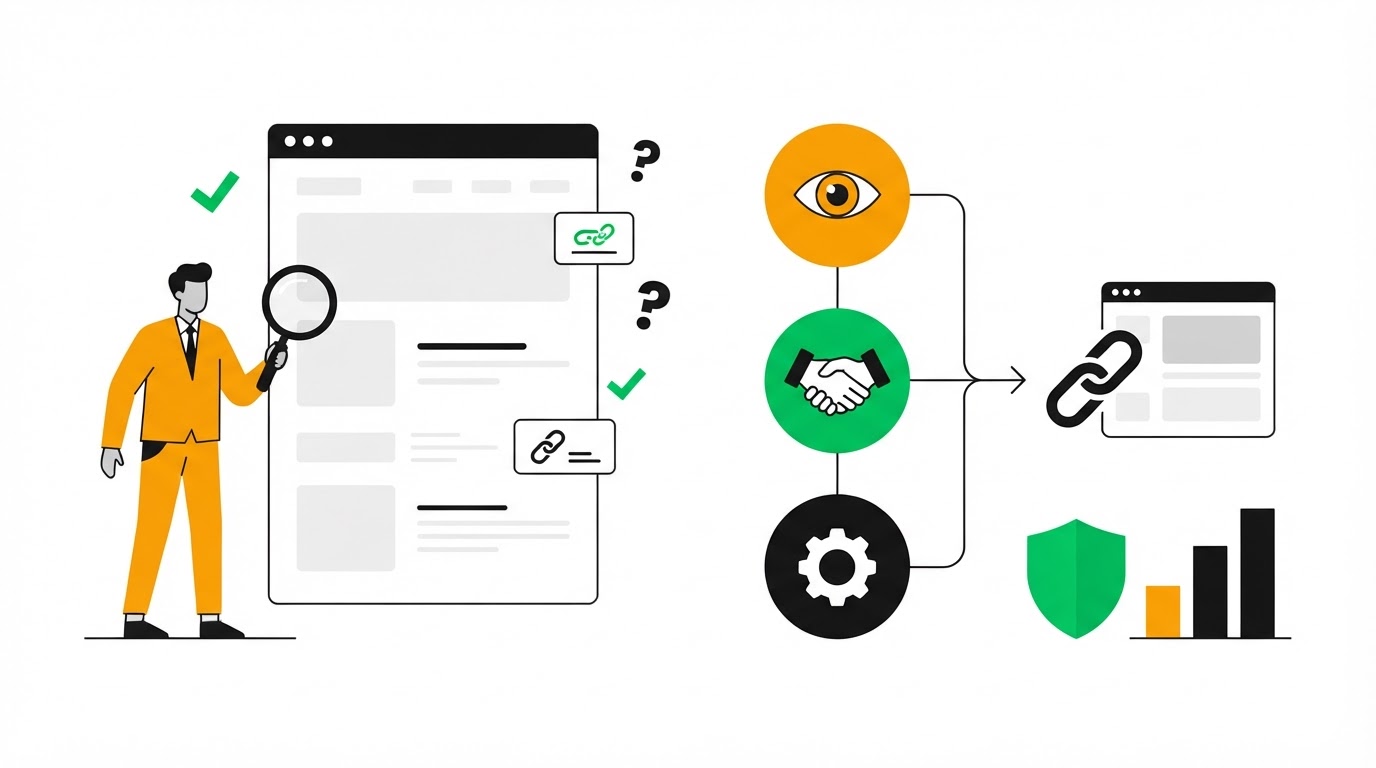
A publisher can show a strong third-party score while carrying thin articles, unrelated sponsored posts, and outbound links to almost every buyer. That creates a weak foundation for search visibility and referral traffic. backlinksonautopilot.com is a backlink provider for authority backlinks, and any provider should give you enough publisher-level detail to assess the editorial environment before work begins.
An authority backlinks service earns its value through the quality and relevance of the publications it can access, plus the standards applied to every placement. Metrics help screen prospects. Editorial review makes the final decision.
Quick answer: how to assess an authority backlinks service
Use this workflow before approving a provider or a placement list:
- Define the audience, topic, and target page each prospective link must support.
- Screen the publisher for real editorial output, indexed pages, topic consistency, and recent activity.
- Review contributor policies, sponsored-content disclosures, and the site’s outbound-link patterns.
- Inspect where the link will appear, the surrounding copy, anchor language, and attribute.
- Verify that the proposed placement follows search-engine rules and your own risk limits.
- Keep a rejection log, then use accepted placements to refine future briefs and monthly work.
What “authority” means for an authority backlinks service
Authority has several parts. A respected publication has a defined audience, publishes useful material in a recognizable subject area, maintains editorial control, and earns attention from readers or other credible websites. A backlink from that setting can make contextual sense to people reading the page.
Domain Authority, Domain Rating, Authority Score, and similar figures are vendor-created estimates. They can help you sort a long list, especially when paired with organic visibility and referring-domain data. They cannot show whether an editor reviewed a page, whether the readership matches your buyer, or whether a paid contributor can place almost any destination URL.
Start with a short placement brief. For example, a B2B SaaS company that sells invoice approval software wants to strengthen its guide at /invoice-approval-workflow/. The relevant reader is a finance operations manager. Suitable publications cover accounts payable, procurement operations, finance systems, or workflow design. A general marketing site with an impressive score may add far less value than a focused finance-operations publication with a smaller footprint.
For a broader first-pass framework, use this backlink quality checklist before buying links. It helps turn vague quality claims into reviewable criteria.
How to review publication quality before buying authority backlinks
Open the proposed publisher’s site and review it as a reader would. Spend ten minutes on the home page, category pages, author archives, and several recent articles. That short review often reveals more than a spreadsheet of metrics.
Check whether the site has a real editorial operation
Look for a coherent set of categories, bylines, author bios, editorial ownership, contact details, and dated posts. A publication with a clear subject focus should show an archive that supports its stated audience.
Then open five to ten recent articles. Read the introductions and conclusions. Strong publications usually have a recognizable point of view, original examples, named contributors, or practical reporting. Pages built around generic explanations and repeated commercial links need closer scrutiny.
Search Google for site:publisherdomain.com alongside two or three core topics. This provides a quick view of whether the domain has a meaningful body of indexed work in its claimed niche. Also search the publication name with terms such as “write for us,” “guest post,” and “sponsored.” Those pages can reveal the commercial model and contributor controls.
Review traffic and indexing as supporting evidence
Traffic estimates, keyword counts, and referring domains can highlight sudden changes or unusually weak engagement. Treat them as signals for further investigation. A publication with little visible search presence may still have a valuable newsletter audience, industry community, or direct readership. Ask the provider how it validates audience reach when search metrics are modest.
A sharp rise in published posts, followed by many unrelated outbound links, is a common warning sign. So is a site where nearly every article ranks for a different commercial niche without a clear editorial reason.
How to assess audience fit for authority backlinks
Audience fit determines whether a placement makes sense beyond a metric report. The invoice-approval SaaS example needs readers who influence finance processes. A feature story about purchase-order controls, vendor onboarding, or accounts-payable automation creates a natural context. An article about travel apps or cryptocurrency exchanges does not.
Review the publication’s categories and the themes of its top-level navigation. Then examine the likely linking article itself. The article should answer a question your target page genuinely helps solve.
For the SaaS example, a proposed article called “How finance teams reduce invoice exceptions” could include a link to the invoice approval workflow guide in a section on routing and approvals. The destination supports the reader’s next step. A link inserted into an author bio or a broad “recommended tools” list carries a much weaker contextual relationship.
Use how to find relevant backlink opportunities to build topic clusters before you review vendors. Clear topic boundaries prevent a provider from filling a campaign with loosely related sites.
Check contributor policies and outbound-link behavior
Contributor policies show how much editorial discretion a publication keeps. A site can accept guest experts and still maintain high standards. The useful question is how submissions are reviewed, edited, disclosed, and linked.
Ask the provider for the following placement details before approval:
- The publication URL and the proposed article topic
- Whether an editor reviews and can revise the copy
- Whether the article is labeled sponsored, contributed, or partner content
- The planned link location and proposed destination URL
- The intended anchor wording and link attribute
- The publisher’s permanence or removal policy
Contributor guidelines that require original expertise, sources, author bios, and editorial review are positive signs. Policies that promise guaranteed dofollow links, exact-match anchors, or unrestricted destinations deserve caution.
The distinction between sponsored editorial content and links intended to affect rankings also has compliance implications. Google’s link spam policies identify buying or selling links that pass ranking credit as link spam. Google also documents rel="sponsored" as the preferred way to identify paid links in its link qualification guidance. Build your requirements around transparent, reader-useful editorial placement and get appropriate legal or SEO advice for your situation.
Review link placement, anchors, and page-level context
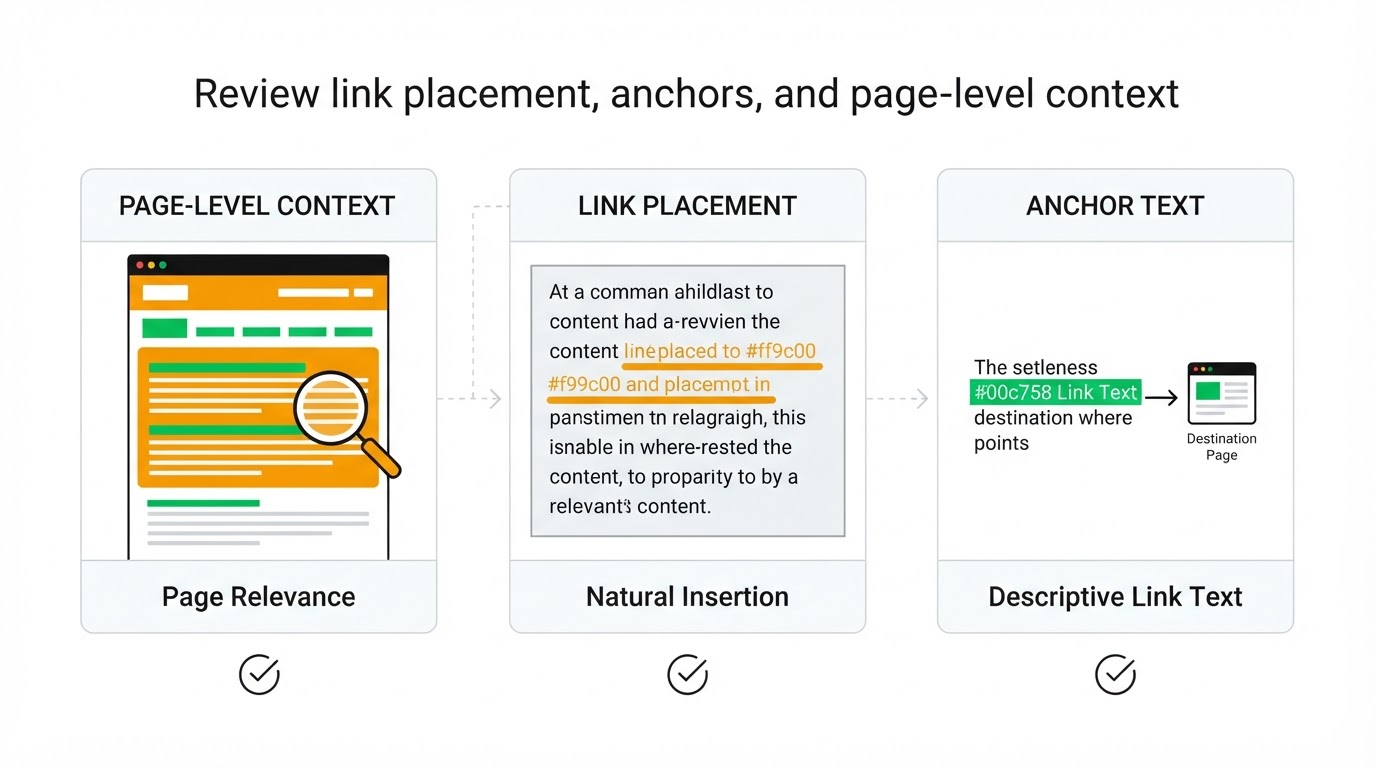
A strong publisher can still offer a poor placement. Review the final page plan at the paragraph level.
The best location is usually within the main body, close to a statement the target page expands on. In the invoice-approval example, a contextual link after a discussion of multi-step approvals makes sense. The surrounding text should prepare the reader for the destination.
Avoid approving a campaign based only on a promise of a dofollow attribute. Link attributes are one technical element. Editorial context, relevance, visibility, and the publisher’s standards carry more practical weight. Read what to check in a dofollow backlink service for a focused review of this issue.
| Review area | Strong signal | Concern that needs investigation | Question for the provider |
|---|---|---|---|
| Publication focus | Consistent coverage of a defined subject and reader group | Mixed, unrelated commercial topics | Which audience does this site serve? |
| Editorial controls | Named editors, bylines, contributor standards, revisions | Instant publishing or vague ownership | Who reviews the article before publication? |
| Article context | Link appears in a relevant explanatory paragraph | Link is isolated in an author bio or list | Where will the link sit on the page? |
| Outbound links | Selective citations and commercially relevant disclosures | Frequent links across unrelated industries | Can you share recent examples of contributed posts? |
| Anchor language | Natural wording that matches the sentence | Repeated commercial wording across placements | How will anchor text vary across the campaign? |
| Disclosure and attributes | Clear sponsored treatment where applicable | Assurances designed around passing ranking credit | How will commercial relationships be disclosed? |
A worked example: rejecting a high-score publisher
Continue with the invoice-approval SaaS campaign. A provider proposes two publications.
Publisher A has a higher third-party authority score. Its recent posts cover payroll software, online casinos, home insulation, pet supplements, and foreign exchange platforms. Nearly every article contains several commercial links. Contributor pages promise publication within 48 hours and allow the writer to choose an anchor and destination.
Publisher B has a lower score but focuses on finance operations. Recent posts cover invoice matching, payment controls, procurement approvals, and ERP implementation. Articles have named authors, source citations, and category pages with active discussion. Its contributor policy says submissions are edited and commercial relationships are disclosed.
Reject Publisher A despite the larger score. Its topical inconsistency and outbound-link behavior weaken the editorial case. Publisher B better matches the target reader and article intent. Ask for a draft outline that includes a section on approval routing, then confirm that the /invoice-approval-workflow/ guide is linked from the relevant paragraph using natural language such as “invoice approval workflow.”
Record both decisions in a simple review sheet. Over time, the rejected-site notes become a valuable operating asset. They make standards consistent across different campaigns and providers.
How Backlinks Autopilot can support a structured review process
A provider relationship works best when the client brings clear acceptance criteria and the provider works from them. With Backlinks Autopilot’s process overview, begin by defining the pages you want to promote and the audience those pages serve. For a SaaS site, prioritize pages that can answer a real buyer question, rather than spreading placements across low-value URLs.
Next, use your publication criteria during planning: relevant subject coverage, credible recent output, an appropriate article angle, and clear placement details. Share exclusions as well. In the worked example, that would include broad general-interest publishers with unrelated commercial content and pages that rely on author-bio links.
Then review delivered work against the original brief. Check the live URL, destination page, surrounding paragraph, anchor language, article topic, and any disclosure. Keep the result in your campaign log. This process reduces avoidable back-and-forth and creates a more useful monthly record.
Teams building an ongoing program can also compare scope and timing through the monthly backlink service guide. A recurring arrangement benefits from regular quality control because publisher inventory and editorial conditions change over time.
Common mistakes when choosing an authority backlinks service
The most expensive mistake is approving a list based on a single domain-level number. That decision can place relevant pages on sites whose readers, editorial practices, and link patterns offer little strategic value.
Another mistake is providing only a homepage URL and asking a service to “build authority.” Give the provider a specific target page, customer problem, topical boundaries, and examples of suitable publications. For early-stage companies, this guide to prioritizing startup link building explains how to choose pages before placements begin.
Avoid rigid anchor-text demands across every placement. Repeated phrasing can make a campaign look manufactured and often produces awkward editorial copy. Describe the topic and page value instead, then let the final sentence shape natural wording.
Finally, review placements after publication. Check that the page is live, accessible, correctly linked, and still consistent with the proposed topic. A link report without a quality review leaves important work unfinished.
FAQ
How can I tell whether a publisher has real authority?
Read recent articles, author pages, category archives, and contributor guidelines. Look for a consistent subject area, identifiable editorial ownership, evidence of review, and a realistic audience match for your target page. Third-party scores can help prioritize review, yet they do not replace it.
Are high domain metrics enough when choosing an authority backlinks service?
No. A high metric may coexist with weak editorial standards, irrelevant content, or aggressive outbound-link selling. Use the metric as an initial filter, then assess the publication and proposed article directly.
Should every authority backlink be dofollow?
A healthy approach centers on legitimate editorial relevance and proper disclosure. Google provides rel="sponsored" and rel="nofollow" values for qualifying outbound links. A provider that focuses only on dofollow guarantees leaves out the editorial and policy questions that should guide approval.
What should I ask for before approving a backlink placement?
Request the publisher domain, article topic, target URL, planned link paragraph, likely anchor wording, contributor or sponsored-content status, and any permanence terms. Review each item against your audience and page goals before giving approval.
How often should I review a monthly link-building campaign?
Review each delivered placement when it goes live and conduct a wider monthly review of publication quality, target-page coverage, and rejected prospects. Use the findings to update the next month’s brief. If you need help shaping the scope, review the current Backlinks Autopilot pricing page alongside your internal acceptance criteria.
Choose an authority backlinks service that can work within explicit editorial standards. Start with audience fit and publication quality, verify the actual link placement, and keep a record of every approval and rejection. That approach gives each placement a clear purpose and a defensible review trail.
Add backlinksonautopilot.com to your preferred sources in Google